

Top 10 AI Tools for Bloggers in 2026 (Honest Review + Free Options)

A few years ago, blogging felt exhausting.
You had to research everything manually, write long posts from scratch, edit endlessly, create graphics, optimize for SEO, and somehow stay active on social media — all at the same time.
Now the workflow looks completely different.
I remember testing AI tools for bloggers for a small niche project and the biggest surprise was not the writing. It was the time saved. Tasks that used to take three or four hours suddenly took thirty minutes.
That's why so many bloggers are using AI in 2026. Not because AI creates perfect content — it doesn't — but because it dramatically speeds up brainstorming, editing, outlining, image creation, keyword research, and content planning.
Some tools are genuinely useful. Others are overhyped. And beginners often waste money subscribing to platforms they don't even need.
So in this guide, I'm breaking down the best AI tools for blogging in 2026 — including where each one shines, where it struggles, pricing details, and whether the free version is actually enough.
How AI Is Actually Helping Bloggers Right Now
Earlier, bloggers used to spend entire days researching topics, writing articles, editing mistakes, designing images, and promoting posts on social media. AI tools are reducing that workload dramatically.
Instead of staring at a blank screen for two hours, creators now use AI to generate ideas, build outlines, optimize SEO, create graphics, and organize content schedules.
That does not mean AI replaces bloggers. It removes the repetitive parts.
For example, if you run a travel blog, AI can help you:
- Generate destination ideas
- Write draft itineraries
- Create Pinterest graphics
- Optimize articles for Google
- Repurpose posts into Instagram captions
One thing many beginners misunderstand is this: successful blogs still need human creativity. Readers want opinions, experiences, stories, and authenticity. AI alone cannot build trust.
The smartest bloggers in 2026 use AI like an assistant. They let tools handle speed and automation while they focus on strategy and creativity.
🔟 Top 10 AI Tools for Bloggers in 2026
1. ChatGPT
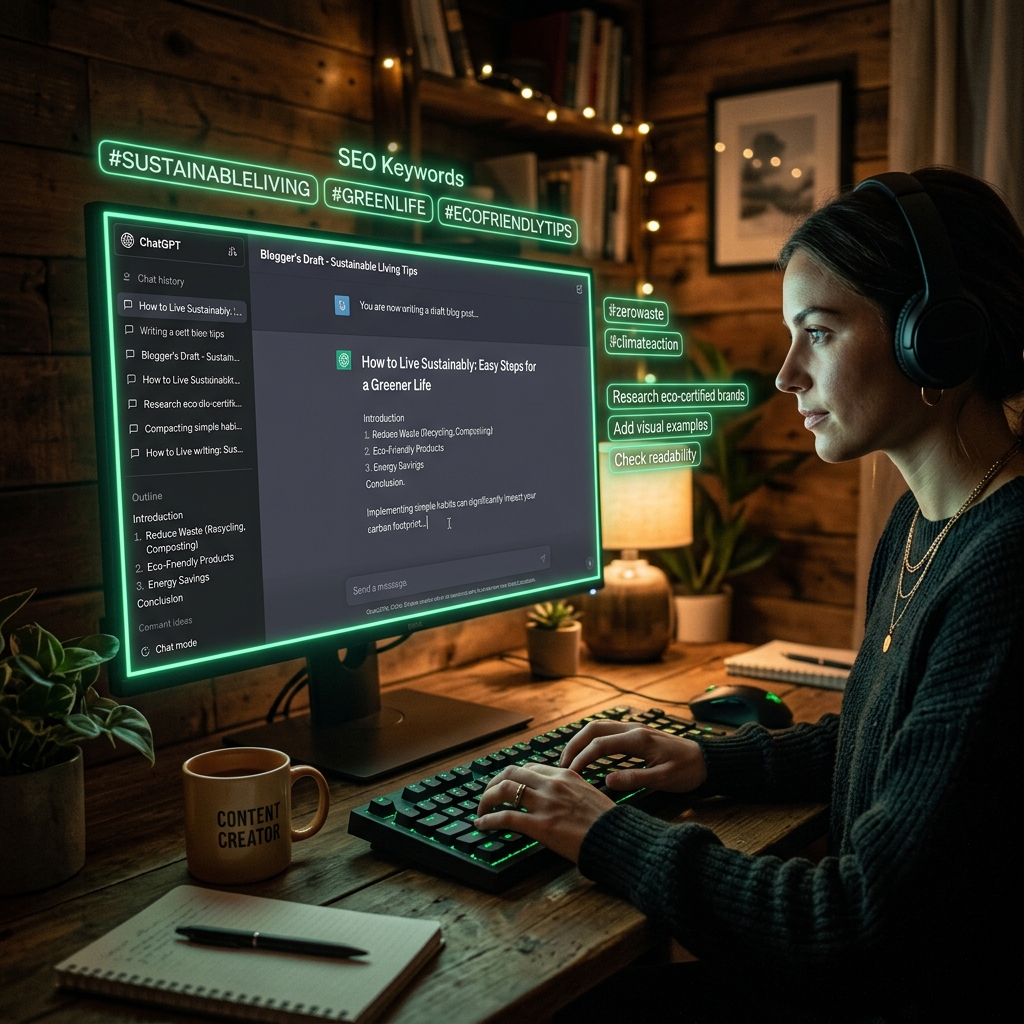
If you ask bloggers which AI tool they use the most in 2026, ChatGPT comes up almost every time.
The reason is simple: it handles a ridiculous number of blogging tasks. When I tested it for blog planning, I noticed it handled brainstorming much faster than traditional keyword research methods. Instead of spending two hours figuring out article angles, you can generate dozens of ideas in minutes.
Smart bloggers don't copy-paste AI content directly. They use ChatGPT for first drafts, outlines, content planning, SEO ideas, social media captions, email sequences, and research summaries.
A food blogger, for example, could ask ChatGPT to create recipe title ideas, Pinterest descriptions, FAQ sections, Instagram captions, and blog introductions all within minutes.
One thing I noticed is that ChatGPT works much better when you treat it like a writing partner instead of an automatic article machine. A lot of beginners expect perfect articles instantly. That rarely happens.
The best workflow usually looks like this: generate ideas with AI, build a rough structure, rewrite sections manually, add personal experience, then polish the final article yourself.
Use Cases for Bloggers
Brainstorming New Topics — When writer's block hits, ChatGPT can instantly produce article concepts based on your niche.
Faster Draft Writing — Instead of starting from zero, bloggers can create rough drafts quickly and personalize them.
SEO Assistance — Many bloggers use it to create meta descriptions, heading ideas, keyword variations, and FAQ sections.
Content Repurposing — One blog post can become LinkedIn posts, Twitter threads, and email newsletters.
Pricing
- Free plan available (GPT-4o access included)
- ChatGPT Plus: $20/month for priority access and advanced features
Pros & Cons
✅ Extremely fast for idea generation
✅ Flexible for multiple blogging tasks
✅ Useful for SEO workflows
✅ Beginner-friendly interface
❌ Facts still need verification
❌ Generic prompts create generic output
❌ Long-form content sometimes repeats itself
❌ Human editing is absolutely necessary
Best For: Beginner bloggers, freelancers managing multiple clients, affiliate marketers, social media creators.
2. Jasper AI

Jasper AI is a premium AI writing assistant designed specifically for marketers, businesses, and professional content creators.
Unlike general-purpose AI tools, Jasper focuses heavily on marketing content and brand voice consistency. It's widely used for blog writing, sales copy, product descriptions, ad copy, landing pages, and SEO articles.
Jasper is known for producing polished marketing-focused content with a consistent tone — something that matters a lot for brands managing multiple writers.
Use Cases for Bloggers
Long-Form Blog Writing — Jasper helps generate complete long-form articles quickly.
Brand Voice Consistency — One of its strongest features. You can define your brand's tone once, and Jasper maintains it across all content.
AI Templates — Specialized templates for blog intros, conclusions, headlines, Facebook ads, and product descriptions.
Team Collaboration — Content teams can collaborate using Jasper's shared workspace tools.
Pricing
- Creator Plan: Around $39/month
- Higher plans for teams cost more
- Free trials available occasionally
Pros & Cons
✅ Strong marketing-focused writing
✅ Helpful templates for content creators
✅ Better brand voice consistency than most competitors
✅ Useful for agencies managing multiple clients
❌ Expensive for new bloggers
❌ Still requires editing before publishing
❌ Some outputs sound overly promotional
Best For: Professional bloggers, marketing agencies, brand-focused businesses, content teams.
Honestly, if someone is only publishing one or two blog posts per week, ChatGPT might already be enough. Jasper makes more sense once you're producing content at scale.
3. Copy.ai

Copy.ai is a powerful AI content creation platform designed for fast content generation.
It's especially popular among bloggers and social media creators who need quick, short-form content. The platform focuses on marketing copy, blog snippets, product descriptions, social media posts, and sales emails.
Use Cases for Bloggers
Fast Content Generation — Quickly generate meta descriptions, headlines, social captions, and short blog sections.
Content Brainstorming — When creators face writer's block, Copy.ai generates fresh angles instantly.
Social Media Automation — Many bloggers use it for consistent promotional content across social platforms.
Pricing
- Free Plan Available (generous limits)
- Paid Plans Start Around $36/month
Pros & Cons
✅ Beginner-friendly interface
✅ Fast output generation
✅ Useful templates for multiple content types
✅ Strong social media features
✅ Good free version
❌ Long-form content quality varies
❌ Repetitive outputs sometimes occur
❌ Less powerful than ChatGPT for research
Best For: Social media bloggers, beginners, affiliate marketers, short-form content creators.
4. Grammarly

Even experienced bloggers make writing mistakes.
Sometimes sentences become too long. Sometimes the tone feels awkward. And after writing thousands of words, grammar issues are easy to miss. That's why Grammarly remains one of the most useful AI tools for bloggers regardless of experience level.
I've seen bloggers improve readability instantly just by running articles through Grammarly before publishing. For non-native English writers, Grammarly can be a huge confidence booster.
Use Cases for Bloggers
Grammar Checking — Instantly detects spelling mistakes, grammar errors, and punctuation issues.
Readability Improvements — The tool helps make content easier to read and more engaging.
Tone Detection — Bloggers can ensure their writing matches the intended audience tone.
Plagiarism Detection — Premium users can scan content for duplicate content.
Pricing
- Free Plan Available
- Premium Plan: Around $12/month
- Business plans for teams available
Pros & Cons
✅ Easy to use — works as a browser extension
✅ Excellent grammar corrections
✅ Improves readability scores
✅ Great for non-native English writers
❌ Advanced suggestions require premium plan
❌ Sometimes over-corrects writing style
❌ Limited content generation capabilities
Best For: Every blogger. Seriously, this one has no exceptions.
5. Canva AI
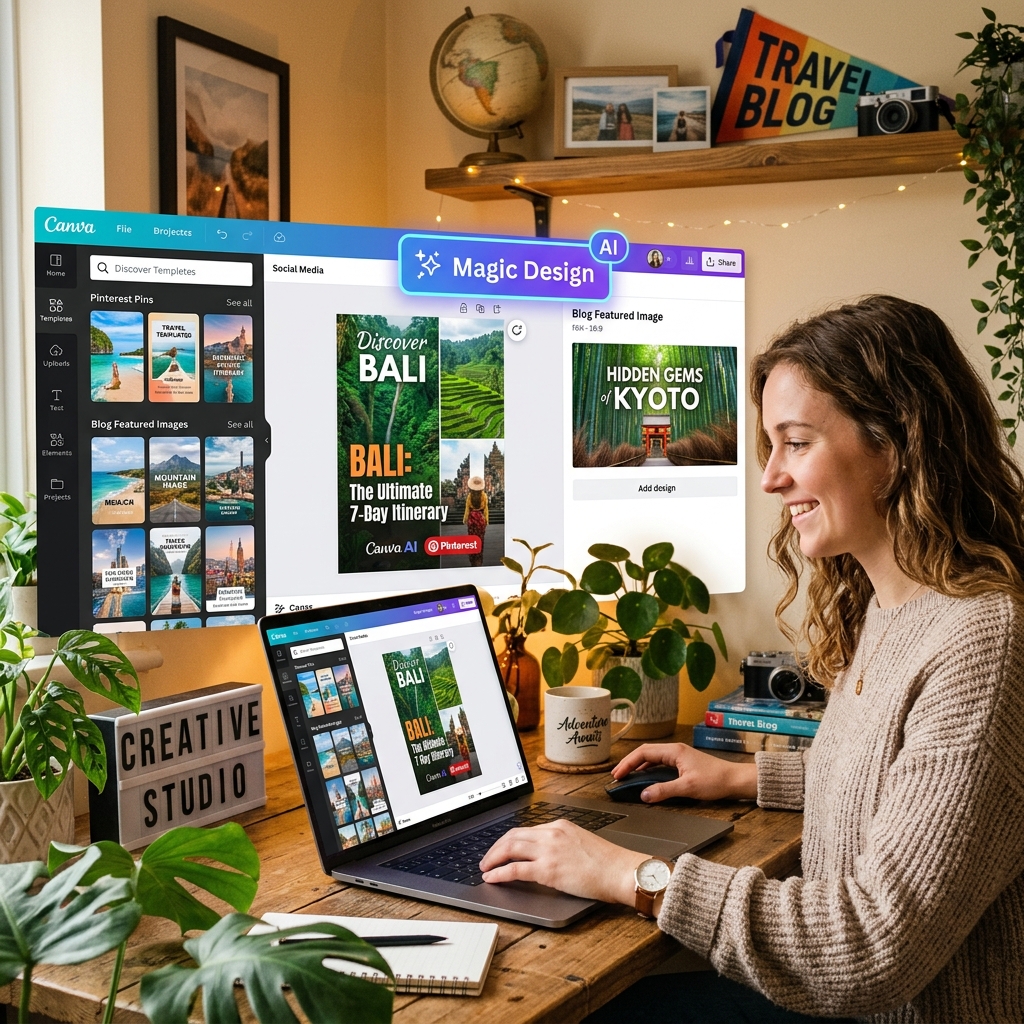
Most bloggers eventually realize something important: good content alone is not enough anymore.
Visuals matter a lot. A blog with strong graphics usually performs better on Pinterest, Instagram, Facebook, and LinkedIn. That's where Canva AI becomes incredibly useful.
Even complete beginners can create professional-looking blog graphics within minutes using Canva templates. You no longer need advanced Photoshop skills or a design background.
Use Cases for Bloggers
Featured Images — Quickly design attractive blog banners without hiring designers.
Pinterest Pins — Pinterest still drives massive traffic for many niches. Canva makes pin creation much faster.
Social Media Graphics — Repurpose blog content into social media posts in minutes.
Brand Kit — Maintain consistent colors, fonts, and logo across all blog visuals.
Pricing
- Free version available (very generous)
- Canva Pro: Around $15/month
Pros & Cons
✅ Very beginner-friendly
✅ Massive template library
✅ Fast drag-and-drop editor
✅ Helpful AI design features (Magic Design, AI image generation)
✅ Great for non-designers
❌ Advanced editing is limited compared to Photoshop
❌ Some templates feel overused
❌ Premium assets require subscription
Best For: Lifestyle bloggers, food bloggers, travel creators, Pinterest marketers, small business bloggers.
6. Notion AI
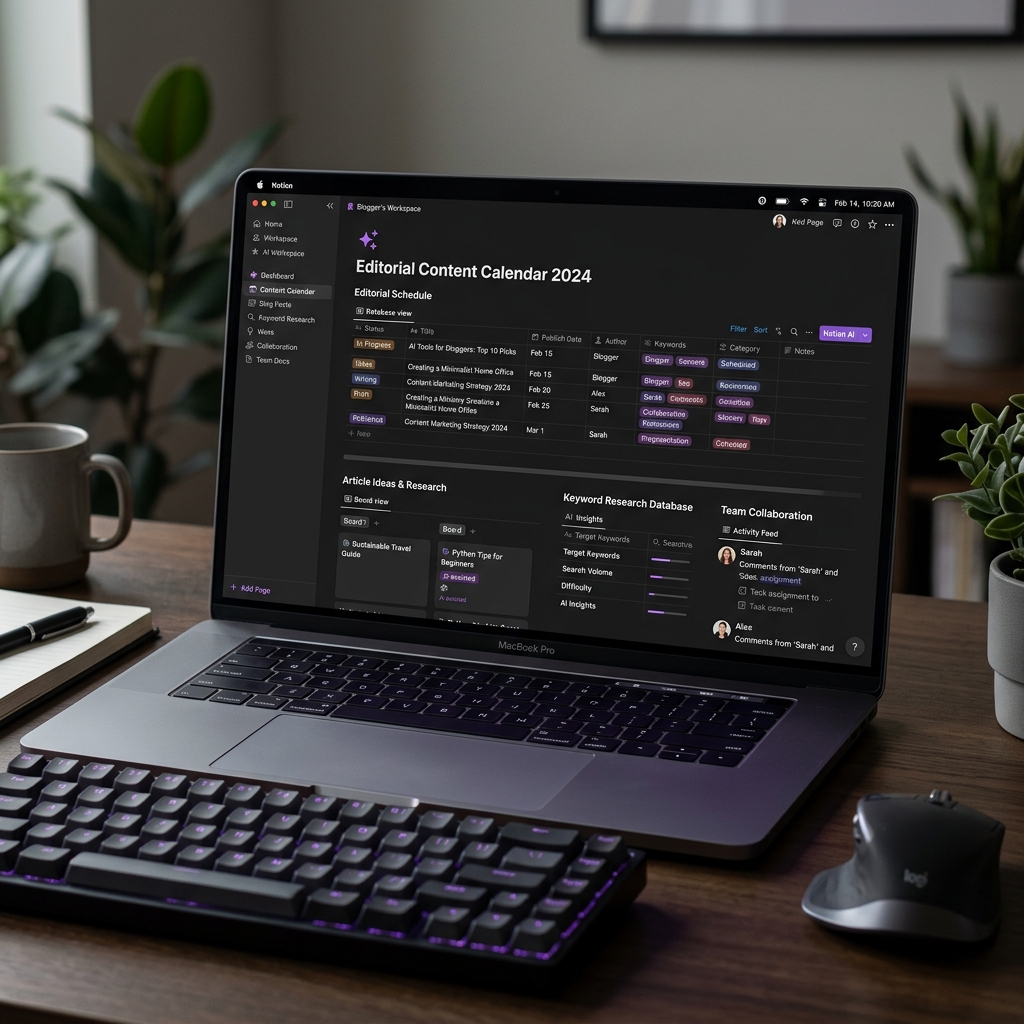
Notion has always been a favourite among organized bloggers.
It functions as a content calendar, research database, writing workspace, team collaboration tool, and idea management system — all rolled into one. The AI layer enhances productivity further.
Use Cases for Bloggers
Content Planning — Organize editorial calendars, publishing schedules, keyword research, and affiliate campaigns.
AI Summaries — Notion AI can summarize meeting notes, research articles, and content ideas.
Workflow Automation — Simplifies project management for solo bloggers and content teams.
Brainstorming — Generate blog ideas directly inside workspace documents.
Pricing
- Free Plan Available
- AI Add-on: Around $10/month extra
- Paid workspace plans start around $10/month
Pros & Cons
✅ Excellent organization features
✅ Strong collaboration tools
✅ Flexible workspace system
✅ Useful AI summarization
❌ AI writing less powerful than ChatGPT
❌ Can feel overwhelming initially
❌ Some advanced features require paid plans
Best For: Professional bloggers, content teams, productivity-focused creators, agencies.
7. Surfer SEO
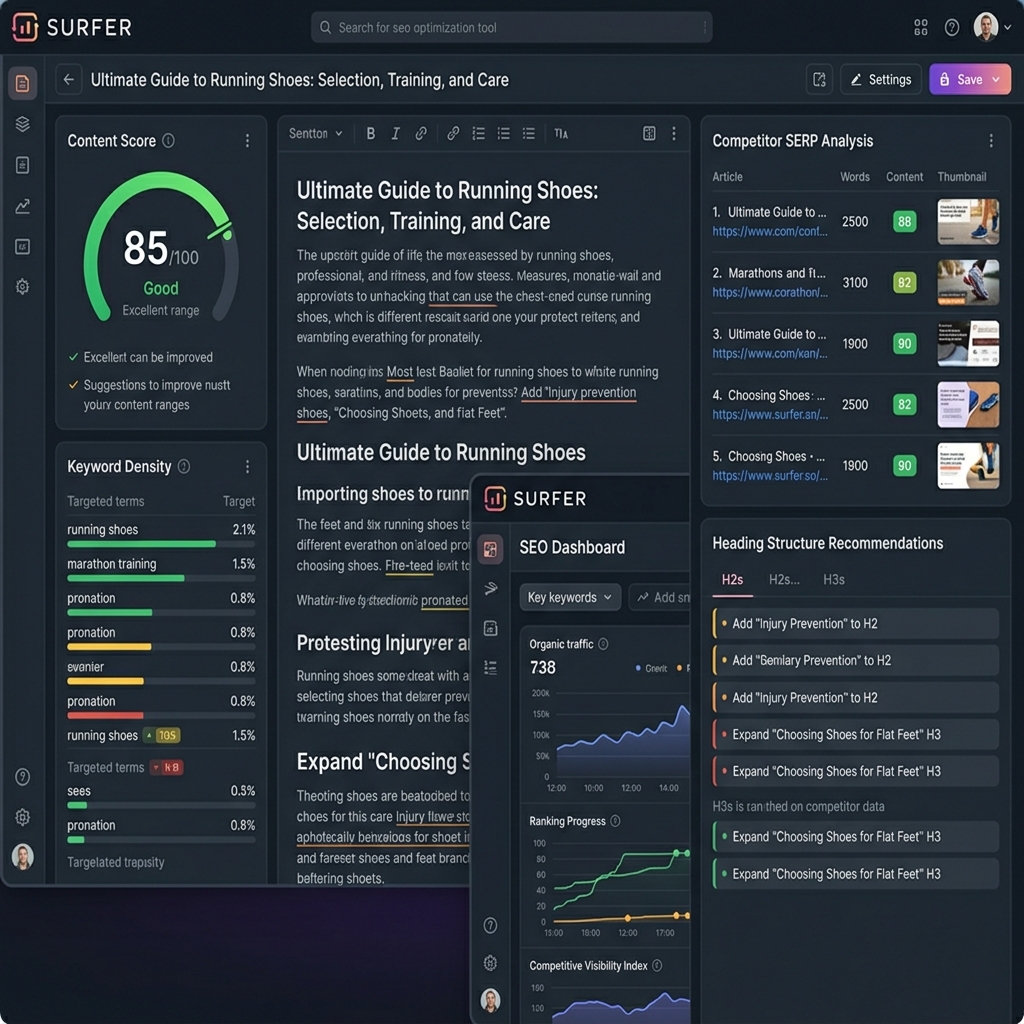
Writing great content is not enough in 2026. Bloggers must optimize articles for search engines to rank on Google.
Surfer SEO is one of the best AI-powered SEO optimization tools available for bloggers. It analyzes top-ranking pages and tells you exactly what your article needs — keyword usage, headings, word count, internal links, and content structure.
The content score feature is genuinely addictive. You can see in real time whether your article is ready to rank or needs more work.
Use Cases for Bloggers
SEO Content Optimization — Improve article ranking potential with data-driven recommendations.
Keyword Research — Find high-performing keywords for your niche.
SERP Analysis — Analyze competitors ranking on Google to understand what's working.
AI Writing Assistance — Generate SEO-optimized content drafts directly in the editor.
Pricing
- Plans Start Around $79/month
- No strong free plan
Pros & Cons
✅ Excellent SEO insights
✅ Helps increase organic rankings
✅ Easy content scoring system
✅ Integrates with Google Docs
❌ Expensive for beginners
❌ SEO learning curve exists
❌ Risk of over-optimization if used mechanically
Best For: SEO bloggers, affiliate marketers, niche website owners, agencies.
8. Frase
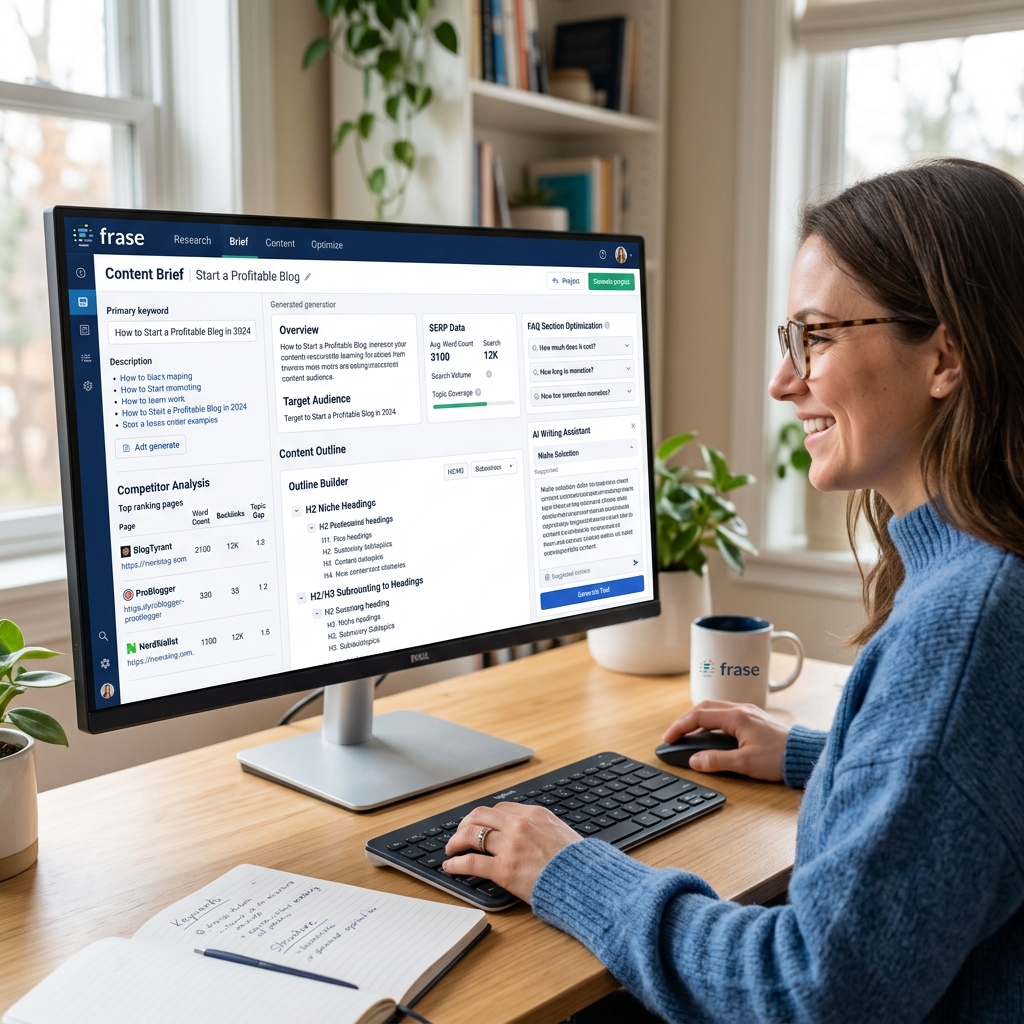
Frase is an AI content research and optimization platform that focuses on helping bloggers create SEO-friendly content faster.
Where Surfer SEO focuses on optimization, Frase excels at the research and briefing stage. It's genuinely useful for understanding what competitor articles cover before you even start writing.
Use Cases for Bloggers
Content Brief Creation — Generate detailed article briefs instantly from any keyword.
SERP Research — Analyze competitor content structure and topics covered.
AI Writing Assistance — Generate SEO-focused blog drafts with context from SERP data.
FAQ Optimization — Create FAQ sections optimized for Google featured snippets.
Pricing
- Starts Around $45/month
- Limited free trial available
Pros & Cons
✅ Excellent SEO research workflows
✅ Great content brief capabilities
✅ Saves content planning time
✅ Good AI writing support integrated with research
❌ Interface can feel complex initially
❌ AI outputs still need editing
❌ Limited free features
Best For: SEO content writers, research-heavy bloggers, affiliate sites.
9. Midjourney

Stock photos are everywhere.
That's exactly why many bloggers started experimenting with AI-generated visuals. Midjourney became popular because it creates images that feel more unique compared to generic stock graphics.
I've seen travel bloggers use it for fantasy-style destination art, while tech bloggers use it for futuristic featured images. The results genuinely stand out.
The learning curve is real, though. Your results depend heavily on prompt quality.
Use Cases for Bloggers
Featured Images — Create visuals that stand out instead of repeating the same stock photos everyone else uses.
Branding — Maintain a specific visual identity across blogs and social media.
Content Promotion — AI visuals often perform well on Pinterest and Instagram because they attract attention quickly.
Pricing
- Paid plans start around $10/month
- No strong free plan currently available
Pros & Cons
✅ Extremely creative image outputs
✅ Great for unique branding
✅ Useful for social media visuals
✅ Better artistic quality than many AI image tools
❌ Requires prompt practice to get good results
❌ Sometimes generates weird image details
❌ Not ideal for every blogging niche
Best For: Creative bloggers, visual brands, Pinterest creators, lifestyle content.
10. Rank Math AI
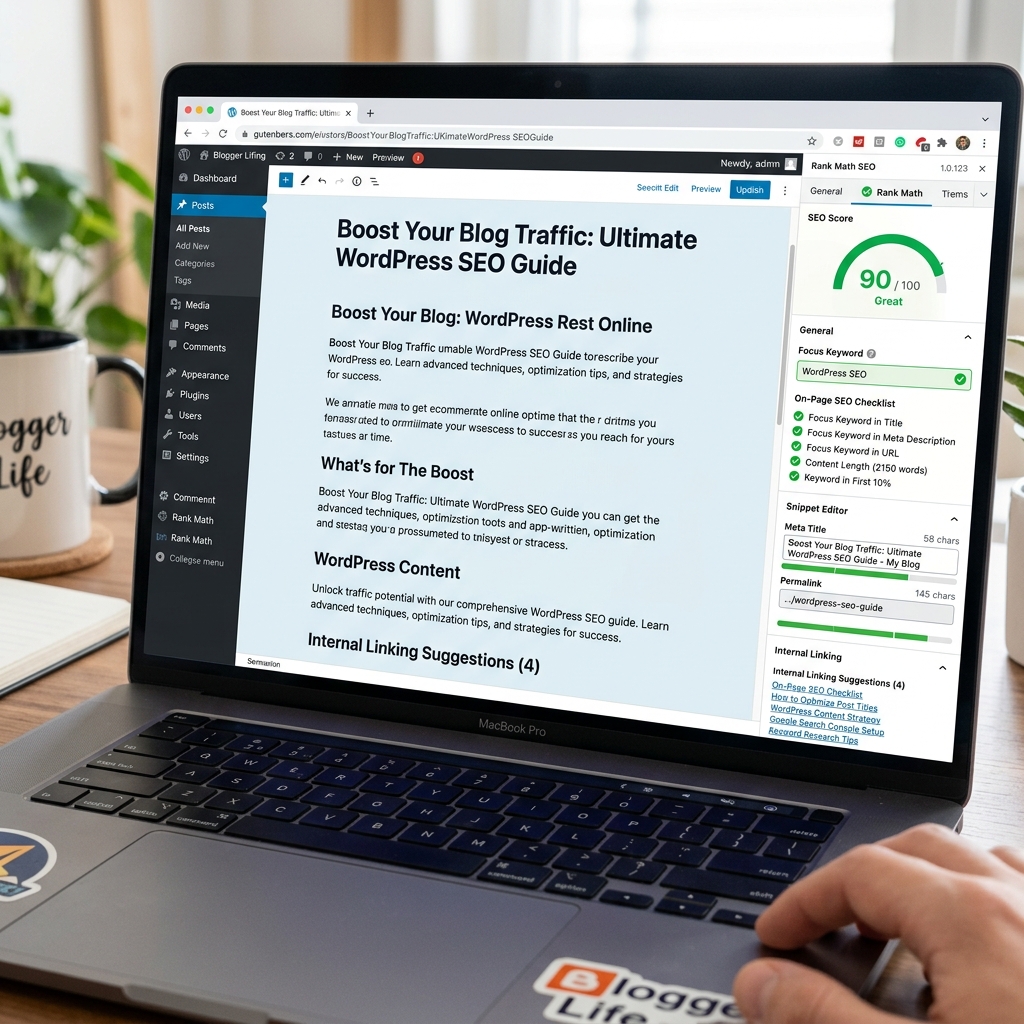
Rank Math AI is an SEO plugin designed for WordPress bloggers. It combines traditional SEO tools with AI-powered optimization — and it's probably the most affordable tool on this entire list.
For WordPress bloggers, Rank Math is practically essential. It guides you through on-page SEO without needing to understand the technical details yourself.
Use Cases for Bloggers
On-Page SEO — Optimize meta titles, meta descriptions, keywords, and internal linking from inside the WordPress editor.
AI Content Suggestions — Get optimization recommendations as you write.
WordPress SEO Management — Manage complete SEO settings, schema markup, and sitemaps directly in WordPress.
Pricing
- Free Version Available (excellent for beginners)
- Paid Plans Start Around $7/month
Pros & Cons
✅ Beginner-friendly
✅ Very affordable
✅ Strong WordPress integration
✅ Useful AI suggestions
✅ Free version covers most needs
❌ Mostly useful only for WordPress users
❌ Advanced SEO still requires expertise
Best For: WordPress bloggers, SEO beginners, affiliate marketers.
📊 Quick Comparison: AI Tools for Bloggers 2026
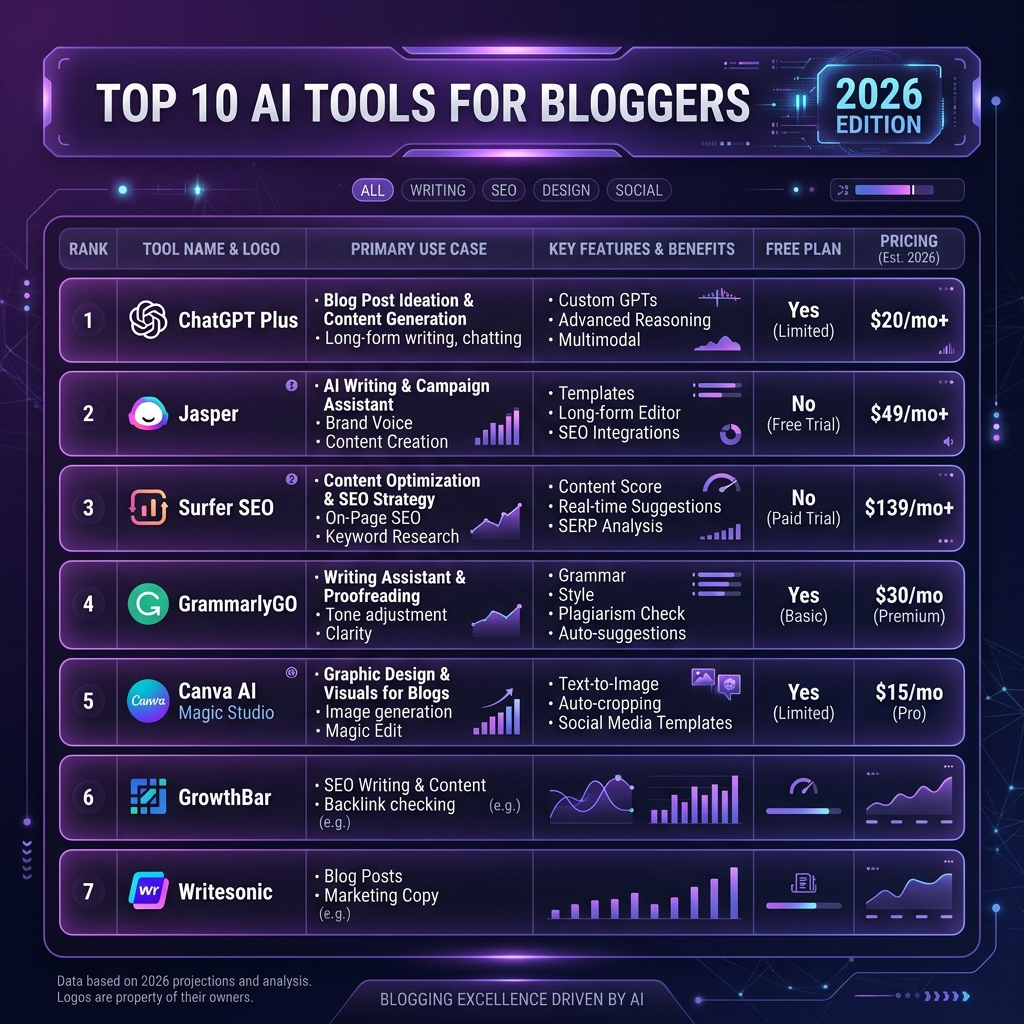
| Tool | Best For | Free Plan | Starting Price |
|---|---|---|---|
| ChatGPT | Drafting, Brainstorming, SEO | ✅ Yes | Free / $20/mo |
| Jasper AI | Marketing Copy, Brand Voice | ❌ No | ~$39/mo |
| Copy.ai | Short-Form, Social Media | ✅ Yes | Free / ~$36/mo |
| Grammarly | Editing, Proofreading | ✅ Yes | Free / ~$12/mo |
| Canva AI | Graphics, Pinterest, Branding | ✅ Yes | Free / ~$15/mo |
| Notion AI | Planning, Organization | ✅ Yes | Free / ~$10/mo |
| Surfer SEO | SEO Optimization | ❌ No | ~$79/mo |
| Frase | SEO Research, Briefs | ⚠️ Trial | ~$45/mo |
| Midjourney | AI Image Generation | ❌ No | ~$10/mo |
| Rank Math AI | WordPress SEO | ✅ Yes | Free / ~$7/mo |
🆓 Best Free AI Tools for Bloggers in 2026
Not every blogger can afford expensive subscriptions in the beginning. The good news is that free AI tools have improved massively.
A beginner blogger can now build content, design graphics, improve SEO, and organize workflows without spending anything.
- ChatGPT Free — Article outlines, blog topic ideas, social media captions
- Grammarly Free — Grammar mistakes, spelling errors, sentence clarity
- Canva Free — Featured images, Pinterest pins, Instagram graphics
- Notion Free — Editorial calendars, research notes, publishing schedules
- Rank Math Free — Meta optimization, keyword setup, technical SEO basics
- Copy.ai Free Plan — Product descriptions, captions, promotional text
The reality is that beginners do not need ten premium subscriptions immediately. A combination of free AI tools is more than enough to grow a blog during the early stages.
✅ How to Use AI Tools Responsibly as a Blogger
Although AI tools are powerful, bloggers should avoid depending entirely on automation.
1. Always Edit AI Content — AI-generated text often requires fact-checking, human tone improvements, and original insights.
2. Add Personal Experience — Readers connect with authenticity. Combine AI assistance with personal stories, real examples, and expert opinions.
3. Avoid Publishing Raw AI Content — Google increasingly values originality and helpful content. Pure AI-generated articles without human editing may perform poorly.
4. Focus on Value — The goal of blogging is solving reader problems. AI should enhance quality, not create spam.
❓ Frequently Asked Questions
Which is the best AI tool for bloggers in 2026?
ChatGPT is the most versatile AI tool for bloggers in 2026. It handles brainstorming, drafting, SEO research, social captions, and email writing all in one place.
Can beginners use AI blogging tools for free?
Yes. ChatGPT, Grammarly, Canva, Notion, Rank Math, and Copy.ai all offer usable free plans. Beginners can build a productive blog workflow without spending anything.
Is AI-generated blog content safe for Google SEO?
Google does not penalize AI content directly. What matters is quality and helpfulness. AI-assisted content that is edited, fact-checked, and enriched with personal experience performs well.
Do I need Jasper AI or Surfer SEO as a beginner?
Not immediately. Beginners can get excellent results with ChatGPT and Rank Math for free. Jasper and Surfer SEO make more sense once your blog is growing and you need advanced features.
What AI tool helps most with blog SEO?
Surfer SEO and Rank Math AI are the strongest for SEO specifically. Surfer SEO gives deep content scoring and competitor analysis. Rank Math integrates directly inside WordPress for on-page optimization.
🔗 Related Guides You'll Find Useful
- Best Free SEO Tools for Bloggers in 2026
- How to Start a Blog in 2026 (Complete Guide)
- How to Get Traffic to Your Website in 2026
- What is SEO and How Does it Work in 2026?
- Keyword Research Guide for Beginners 2026
- Google AdSense Approval Guide 2026
🚀 Conclusion
After testing different AI tools, one thing becomes obvious pretty quickly.
AI is not replacing bloggers. It's replacing repetitive work. That's a huge difference.
The bloggers getting the best results right now are not blindly publishing AI-generated articles. They're using AI to speed up research, organize ideas, improve SEO, create graphics, and save time. The human side still matters — actually, it matters more than ever.
Readers can usually tell when content feels generic or robotic. That's why personal experience, opinions, storytelling, and authenticity still separate good blogs from forgettable ones.
If you're just starting out, a simple setup like this is enough:
- ChatGPT for drafting and brainstorming
- Grammarly for editing
- Canva for graphics
- Rank Math for WordPress SEO
- Notion for planning
That combination alone can improve productivity massively. As your blog grows, you can experiment with advanced tools like Jasper, Surfer SEO, or Midjourney.
One mistake many new bloggers make is depending too much on automation. AI should support your workflow — not replace your thinking.
In my opinion, the future belongs to bloggers who combine smart AI usage, real expertise, consistent publishing, original ideas, and strong audience trust.
Because at the end of the day, people don't follow blogs just for information. They follow personalities, experiences, and perspectives.
AI can help you write faster. But it still can't replace your voice.


