

Product Review Blog: How to Write High-Converting Review Articles in 2026
 A modern reviewer's workspace — the starting point for every great product review article
A few years ago, writing a product review blog was honestly much easier.
You could publish a basic 1,000-word article, insert a few affiliate links, add phrases like "best tool" or "top software," and somehow still rank on Google. That approach does not work anymore. Search engines became smarter, readers became more skeptical, and AI-generated content flooded the internet faster than most bloggers expected.
I realized this after updating one of my older review articles recently. The original version looked polished and SEO-friendly, but it felt empty. It explained features well, yet it lacked personality, experience, and practical insight. The bounce rate was terrible. Visitors landed on the page and left within seconds.
So I rewrote the article differently.
Instead of sounding like a product brochure, I focused on real usage, frustrations, observations, and honest opinions. Surprisingly, engagement improved almost immediately. Readers stayed longer, clicked more links, and conversions increased.
That shift explains why product review blogging still works in 2026 — but only when the content feels genuinely useful.
Modern readers do not want robotic summaries anymore. They want authentic guidance from someone who actually tested the product and understands the real-world experience behind it.
This guide explains exactly how to write review articles that:
- rank well on search engines,
- feel naturally human-written,
- build audience trust,
- and convert readers into buyers without sounding overly promotional.
What Is a Product Review Blog?
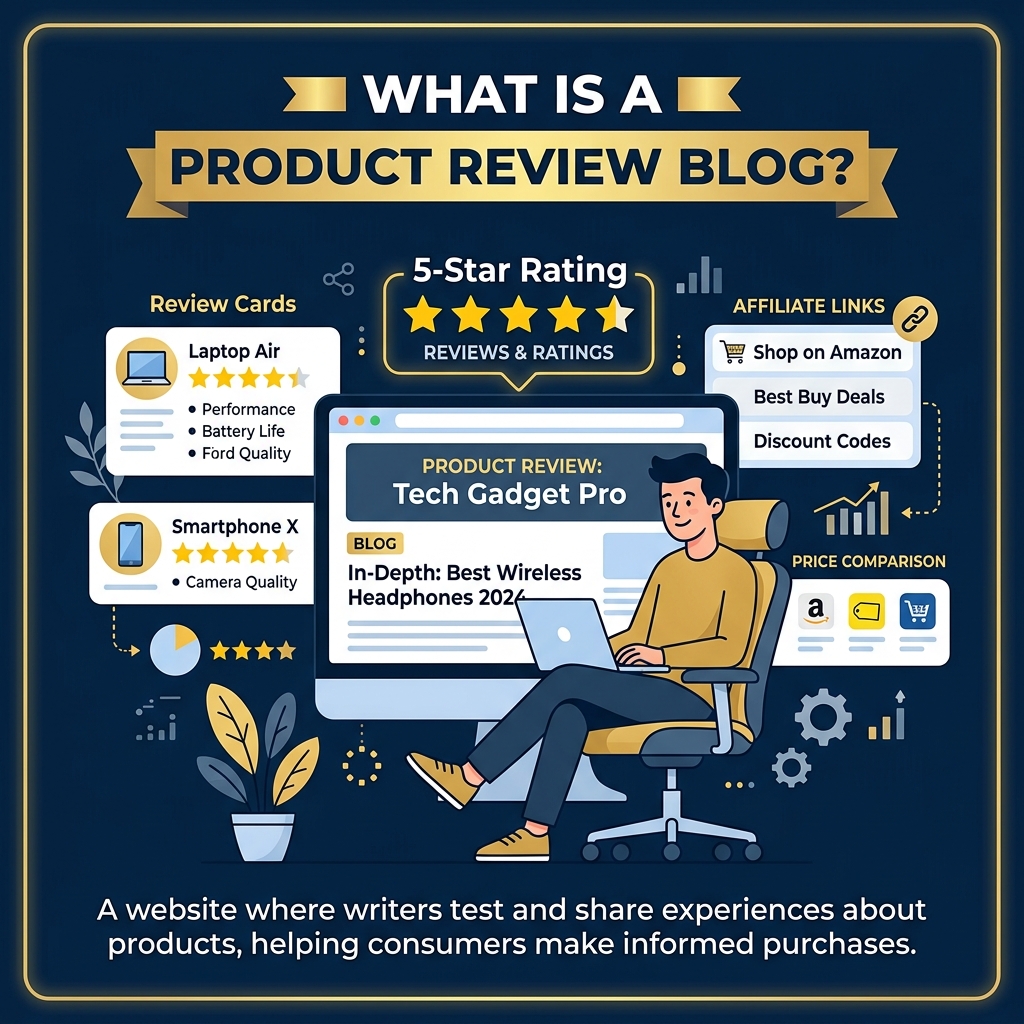 A product review blog bridges the gap between reader curiosity and confident buying decisions
A product review blog is an article that evaluates a product, service, software, or tool based on real analysis, testing, experience, pricing, strengths, weaknesses, and overall value.
At its core, a review article helps readers answer one simple question:
"Should I spend money on this?"
That is really what people care about.
When someone searches:
- "Hostinger review"
- "Best AI writing tool review"
- "Canva Pro review"
- "Is Product X worth it?"
they are usually close to making a buying decision already. They simply need reassurance before purchasing.
This is why review content converts so well compared to informational blog posts.
The reader already has intent.
Your article just needs to provide clarity.
Why Product Review Blogs Still Work in 2026
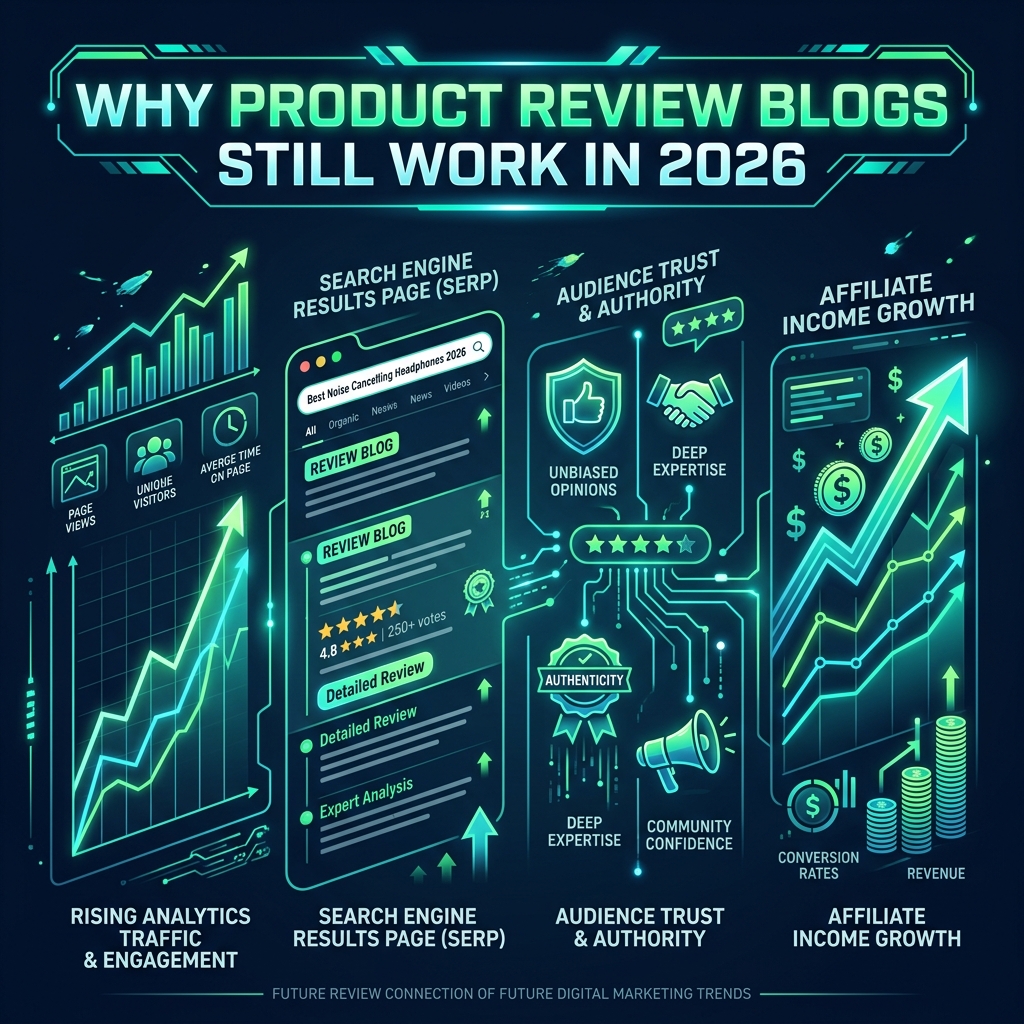 Review content consistently outperforms generic informational posts for conversions and trust
Some marketers keep saying blogging is dead. Personally, I think low-effort blogging is what actually died.
Helpful review content still performs extremely well because people trust experiences more than advertisements.
Think about your own behavior for a second.
Before buying a laptop, software subscription, phone, or online course, what do most people do?
They search for reviews.
Not advertisements.
Reviews.
That behavior has not changed.
If anything, consumers became even more research-focused because there are too many exaggerated marketing claims online now.
One thing I noticed while studying successful affiliate websites is that the highest-performing review blogs rarely sound perfect. In fact, some of them are surprisingly casual. They include opinions, frustrations, comparisons, personal stories, and even moments where the writer changes their mind halfway through the article.
That unpredictability feels human.
And readers trust it.
The Perfect Structure for a Product Review Blog
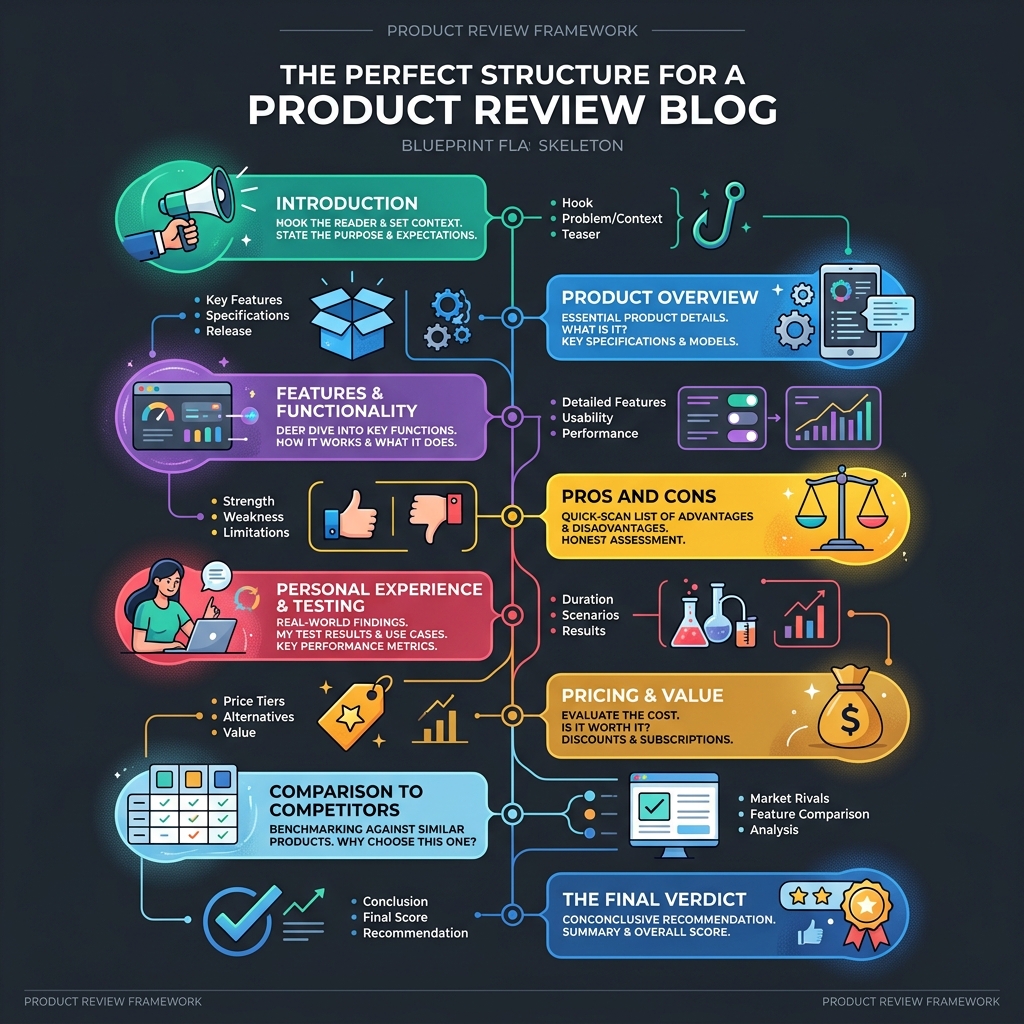 A clear, well-planned structure guides the reader naturally from curiosity to a confident decision
Structure matters more than many bloggers realize.
Even if your information is valuable, poor formatting can destroy readability completely. Readers skim first before deciding whether your article deserves attention.
A good review article should guide the reader naturally from curiosity to decision-making.
Here is the structure that works best in 2026.
1. Introduction
Most introductions fail because they sound generic.
Example of what not to do:
"Product X is an innovative software with advanced features."
Nobody remembers lines like that.
A better introduction feels conversational and experience-driven.
Example:
"I first tried Product X after seeing several creators recommend it online. Honestly, I expected another overhyped tool with aggressive marketing and average performance. But after using it for almost two weeks, a few things genuinely surprised me — especially how much faster it made my workflow."
That introduction works because it creates curiosity while sounding natural.
Your introduction should:
- mention the problem,
- introduce the product,
- explain why you tested it,
- and preview your honest opinion.
Not everything needs to sound overly polished.
Sometimes slightly casual writing feels more trustworthy.
2. Quick Product Overview
Many readers scroll quickly before committing to the full article. A simple overview section helps them understand the basics immediately.
Example:
| Category | Details |
|---|---|
| Product Name | Product X |
| Product Type | AI Writing Tool |
| Best For | Bloggers & Marketers |
| Free Trial | Yes |
| Starting Price | $19/month |
| Overall Rating | 8.5/10 |
Simple tables improve readability significantly — especially on mobile devices.
3. Features Section
This section is where many review blogs start sounding robotic.
The mistake is simple: writers copy features directly from the product website.
Readers do not care about marketing language.
They care about outcomes.
Instead of writing:
"AI-powered content generation system."
Write something more realistic like this:
"The AI writer helped me create article outlines much faster than my usual process. It was not perfect, though. Some outputs still needed editing, especially factual sections."
That balance matters.
Mentioning limitations often increases trust more than endless praise.
4. Pros and Cons
Honestly, if your review does not include negatives, readers will probably assume the article exists only for affiliate commissions.
Every product has flaws. Even excellent ones.
Pros:
- Beginner-friendly dashboard
- Fast setup process
- Affordable compared to competitors
- Helpful SEO suggestions
- Clean user interface
Cons:
- AI outputs occasionally repetitive
- Free plan feels restrictive
- Advanced customization options are limited
One important thing here.
Do not invent fake disadvantages just to appear balanced. Readers can sense forced criticism too.
Be genuine.
5. Real Usage Experience
This section matters more now than it did a few years ago.
Google increasingly prioritizes experience-based content. Generic summaries without real testing feel weak compared to articles that include practical observations.
For example:
"During the first few days, I mainly used the tool for blog outlines and affiliate article ideas. By the second week, I started testing longer-form content generation. The speed was impressive, but I noticed factual accuracy still required manual checking before publishing."
Specific details make the article feel alive.
Notice how natural imperfections improve authenticity:
- "first few days"
- "second week"
- "manual checking"
These small details matter psychologically.
6. Pricing Breakdown
Many readers skip directly to pricing because they already know what the product does.
This section should stay simple.
| Plan | Price | Best For |
|---|---|---|
| Free | $0 | Beginners |
| Starter | $19/month | Bloggers |
| Pro | $49/month | Agencies |
| Enterprise | Custom Pricing | Teams |
After showing prices, add personal interpretation.
Example:
"For solo bloggers, the starter plan probably offers enough value. I personally felt the Pro plan only becomes worth it if you publish content consistently every week."
That opinion makes the section feel less robotic.
7. Comparing With Competitors
Comparison content performs surprisingly well in SEO because readers often evaluate multiple products before buying.
You do not need massive comparison tables everywhere.
Sometimes simple observations work better.
Example:
"Compared to Jasper AI, Product X feels easier for beginners. Jasper still offers deeper customization, but the interface can feel overwhelming if you are completely new to AI writing tools."
Short. Direct. Human.
8. Who Should Actually Use This Product?
This section improves conversions because readers naturally categorize themselves.
This product works well for:
- affiliate bloggers,
- freelancers,
- content creators,
- small business owners,
- and beginners exploring AI tools.
However, it may not suit:
- enterprise teams,
- advanced developers,
- or users expecting fully automated publishing.
Not every product needs to fit everyone.
And saying that openly increases credibility.
SEO Tips for Product Review Blogs
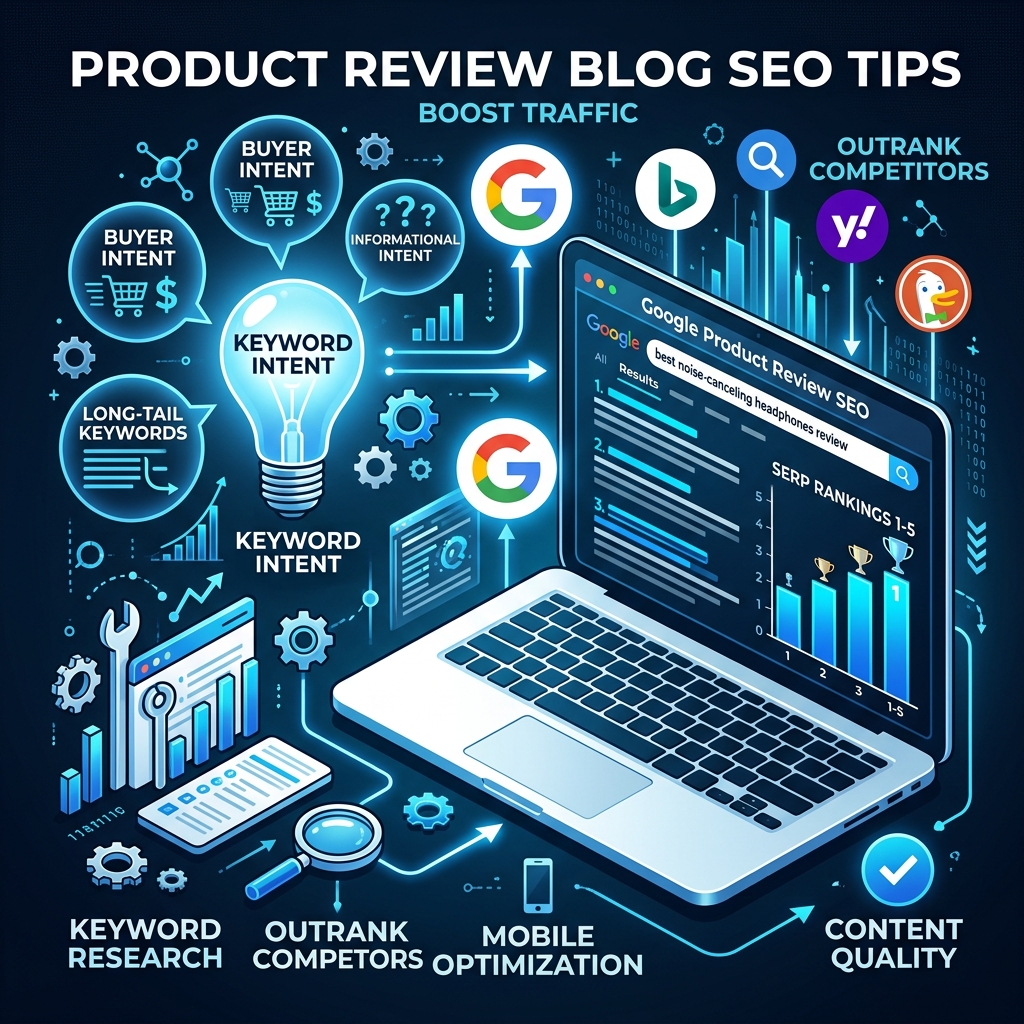 Smart SEO combines buyer-intent keywords with natural, experience-driven writing
Good writing alone is not enough.
If nobody finds your article, conversions will stay low no matter how detailed the review is.
That said, modern SEO feels different now.
Over-optimized articles with robotic keyword repetition usually perform worse than natural, experience-driven content.
Use Buyer Intent Keywords
Target phrases like:
- review,
- best,
- comparison,
- alternative,
- worth it,
- honest review.
These keywords attract readers closer to purchasing decisions.
Avoid Keyword Stuffing
This still happens constantly.
Some bloggers repeat the same keyword unnaturally in every paragraph. It destroys readability immediately.
Google understands semantic relevance much better now.
Write naturally first. Optimize second.
Add FAQs
FAQ sections help with featured snippets and voice search visibility.
Example:
Is Product X beginner friendly?
Yes. The interface feels simple enough for beginners, although advanced users may eventually want more customization options.
Does Product X offer a free trial?
Yes, users can test several features before upgrading to paid plans.
Improve Readability
Readers scan content quickly.
Large text blocks reduce engagement.
Use:
- short paragraphs,
- bullet points,
- tables,
- screenshots,
- and clear subheadings.
Even one-line paragraphs can improve reading flow.
Like this.
Building Trust in Product Reviews
 Trust is the single most important conversion factor in any review article
Trust influences conversions more than fancy writing techniques.
Readers buy products from reviewers they believe.
Simple.
Share Honest Opinions
Not every section needs to sound neutral.
Example:
"Personally, I preferred the simpler interface compared to some feature-heavy competitors that felt unnecessarily complicated."
Opinions make content feel human.
Mention Weaknesses Clearly
One thing I learned from affiliate blogging is this:
Honest criticism often improves sales.
Because balanced reviews feel more credible than perfect praise.
Add Screenshots and Real Examples
Visual proof matters.
Include:
- dashboard screenshots,
- analytics results,
- workflow examples,
- or before-and-after comparisons.
Readers trust visible evidence more than descriptions alone.
Common Mistakes to Avoid
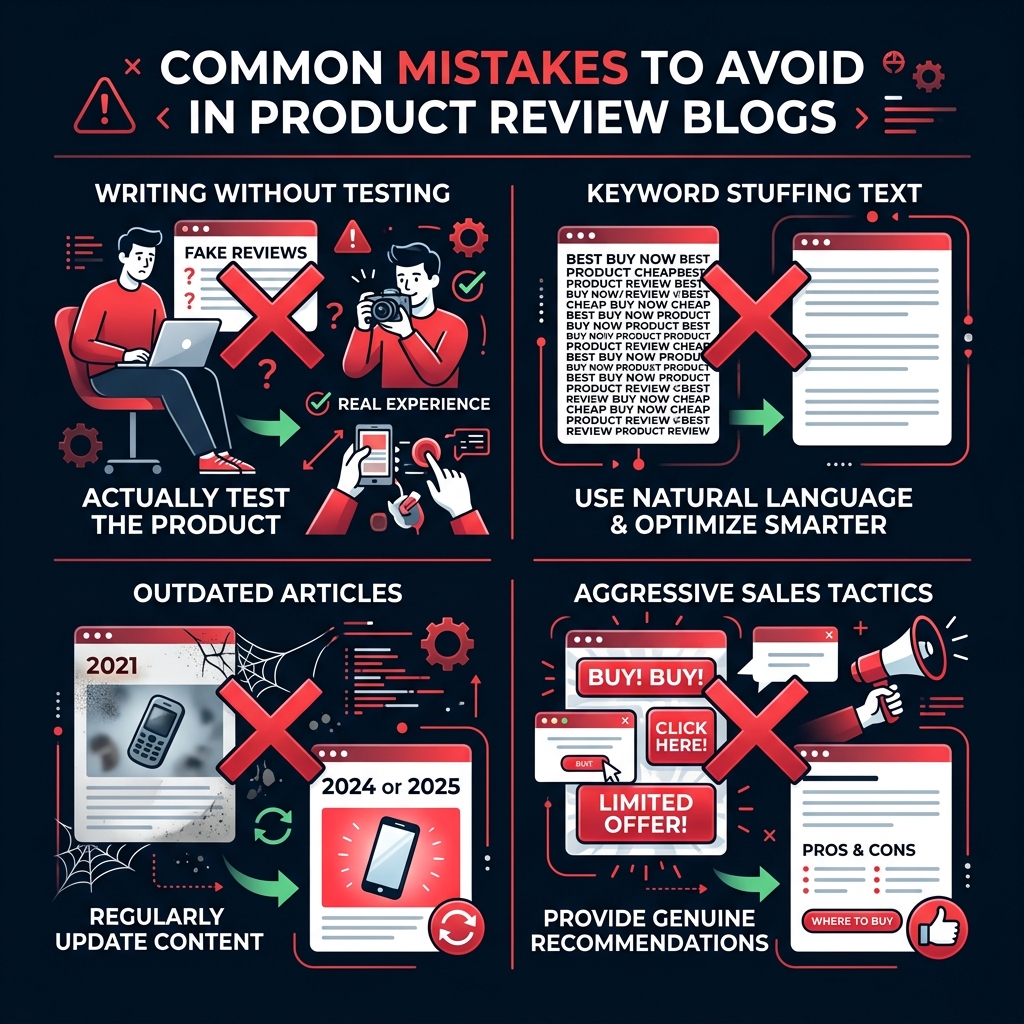 Avoiding these pitfalls is just as important as following best practices
Some review articles fail for predictable reasons.
Writing Without Testing
This is still the biggest mistake online.
Readers can immediately sense when a review is based entirely on copied information.
Even small personal details improve authenticity significantly.
Sounding Too Formal
Perfect grammar is not always an advantage.
Real humans interrupt thoughts occasionally, change tone, and speak casually sometimes.
That natural variation improves readability.
Updating Nothing
Products evolve constantly.
Features change. Pricing changes. Interfaces change.
Old reviews lose credibility quickly.
Being Overly Aggressive With Sales
Readers dislike obvious pressure tactics.
A helpful recommendation converts better than desperate promotion.
Usually by a wide margin.
Final Verdict
 The best review articles feel real, not perfect — and that authenticity drives consistent conversions
Writing successful product review blogs in 2026 is no longer about sounding "professional" all the time. In many cases, overly polished content actually feels less trustworthy because readers associate it with AI-generated articles and aggressive affiliate marketing.
The reviews that perform best today are the ones that feel real.
Not perfect.
Real.
If you want your product review blog to rank well and convert readers consistently, focus on:
- personal experience,
- honest observations,
- balanced opinions,
- useful comparisons,
- SEO fundamentals,
- and reader trust.
Use AI tools if they help with drafting or structure. There is nothing wrong with that. But always add your own voice, examples, and perspective before publishing.
Because at the end of the day, people do not remember perfectly optimized articles.
They remember reviews that actually helped them make better decisions.
Related Guides & Resources
- How to Start a Blog in 2026: A step-by-step guide to setting up your blogging platform and publishing your first posts.
- Best Free SEO Tools for Bloggers 2026: Tools to help your review articles rank without spending on expensive software.
- Affiliate Marketing for Beginners: Learn how to monetize review content effectively with affiliate programs.


