

How to Start a Blog in 2026 (A Real Beginner’s Guide That Actually Works)
Let’s be honest for a second—this is probably the very first question on your mind right now.
With TikTok constantly pulling our attention, YouTube Shorts taking over, AI tools generating text in seconds, and everything moving incredibly fast, blogging can feel a little... outdated. Like something people did ten years ago when dial-up internet was still a recent memory.
But here’s the reality check you need: blogging didn’t die—it just grew up.
In 2026, blogs are no longer just “write whatever you feel and hope someone reads it.” They are strategic, highly focused machines. The blogs that succeed today—the ones making real money and driving massive traffic—are the ones that do three specific things:
- They solve real, immediate problems.
- They go deep into topics (not just surface-level, generic content).
- They build genuine trust over time.
And here is the biggest advantage of starting a blog today. Unlike social media platforms, your blog is a piece of digital real estate that you actually own. There is no algorithm update that can suddenly cut your reach to zero overnight. There is no risk of an arbitrary account ban wiping out years of hard work in a single click.
If you do it right, and if you have the patience to stick with it, a blog can become an incredible asset. It can turn into a passive income source, a powerful personal brand, or even a full-time business that replaces your 9-to-5.
So yes—starting a blog in 2026 is absolutely still worth it. But only if you approach it smartly. Gone are the days of treating it like a personal diary. Today, you need to treat it like a business from day one.
Let’s break it down, step by step, without the complicated tech jargon.
Step 1: Choosing Your Niche (Seriously, Don’t Skip This)

This is the exact spot where 90% of beginners go wrong. I see it all the time.
They get excited, buy a domain name, and start a blog with the mindset: 👉 “I’ll just write about everything I like! Tech, food, travel, and my dog.”
That sounds totally fine in theory. But in practice? It’s a disaster. It works until you realize that Google has absolutely no idea what your blog is actually about. And if Google is confused, your readers will be confused too.
A niche is basically your blog’s core identity. It is the one thing you want to be known for. It tells people instantly: 👉 “This is exactly what I can help you with.”
Instead of going broad and trying to appeal to everyone, you need to go specific. Really specific. In the SEO world, we call this building "topical authority."
Let’s look at a practical example:
- “Fitness” → Way too broad. You’ll be competing against Men’s Health and WebMD. You will lose.
- “Home workouts for beginners” → Much better. You’ve narrowed down the audience.
- “Weight loss for busy office workers” → Now we’re talking. This is incredibly strong, highly targeted, and solves a very specific problem for a specific group of people.
Do you see the difference there?
When your niche is crystal clear, a few magical things happen. Google can categorize and rank your site faster. Readers trust you more because you speak directly to their unique problems. And eventually, monetization becomes significantly easier because you know exactly what your audience wants to buy.
Also, a quick piece of advice: don’t overthink the "passion" aspect too much. You don’t need to be head-over-heels obsessed with your topic. You just need to be interested enough in it to keep researching and writing about it for the next couple of years.
A simple formula for finding a great niche: 👉 Interest + Demand + Money potential = Good niche
Step 2: Domain & Hosting (Making It Real)

Alright, this is the exciting moment. This is when your blog transitions from a cool idea in your head into an actual, live website on the internet.
Let's start with your domain name. This is your blog’s address online (like yourblog.com).
When picking a domain name, try to keep it simple. It should be short, easy to spell, and clean. Avoid using weird symbols, hyphens, or numbers. If you have to spell out your domain name to a friend and explain that "there's a dash between the words and the number 4," it's too complicated.
Now, let's talk about hosting.
Think of web hosting like renting physical space on the internet where your blog’s files live. If your domain name is your home's address, your hosting is the actual house.
A lot of beginners completely freeze at this stage. They worry that setting up hosting is going to be a massive technical headache involving coding and servers. Let me reassure you: it’s honestly not like that anymore.
Most modern hosting platforms have made the process incredibly beginner-friendly. If you can set up a Facebook account, you can set up web hosting.
The process usually looks exactly like this:
- Choose a reliable hosting provider (like Hostinger, Bluehost, or SiteGround).
- Pick their most basic, affordable plan. (You don't need the expensive "Pro" tier when you have zero traffic).
- Register your chosen domain name during checkout.
- Click the magical “Install WordPress” button.
That’s literally it. Within 20 to 30 minutes, your site is live on the internet.
My best advice here? Don’t over-research this step. People spend weeks comparing hosting companies. Just pick a reliable, affordable provider and move forward. You can always upgrade later when you're rich and famous.
Step 3: WordPress Setup (Your Control Room)
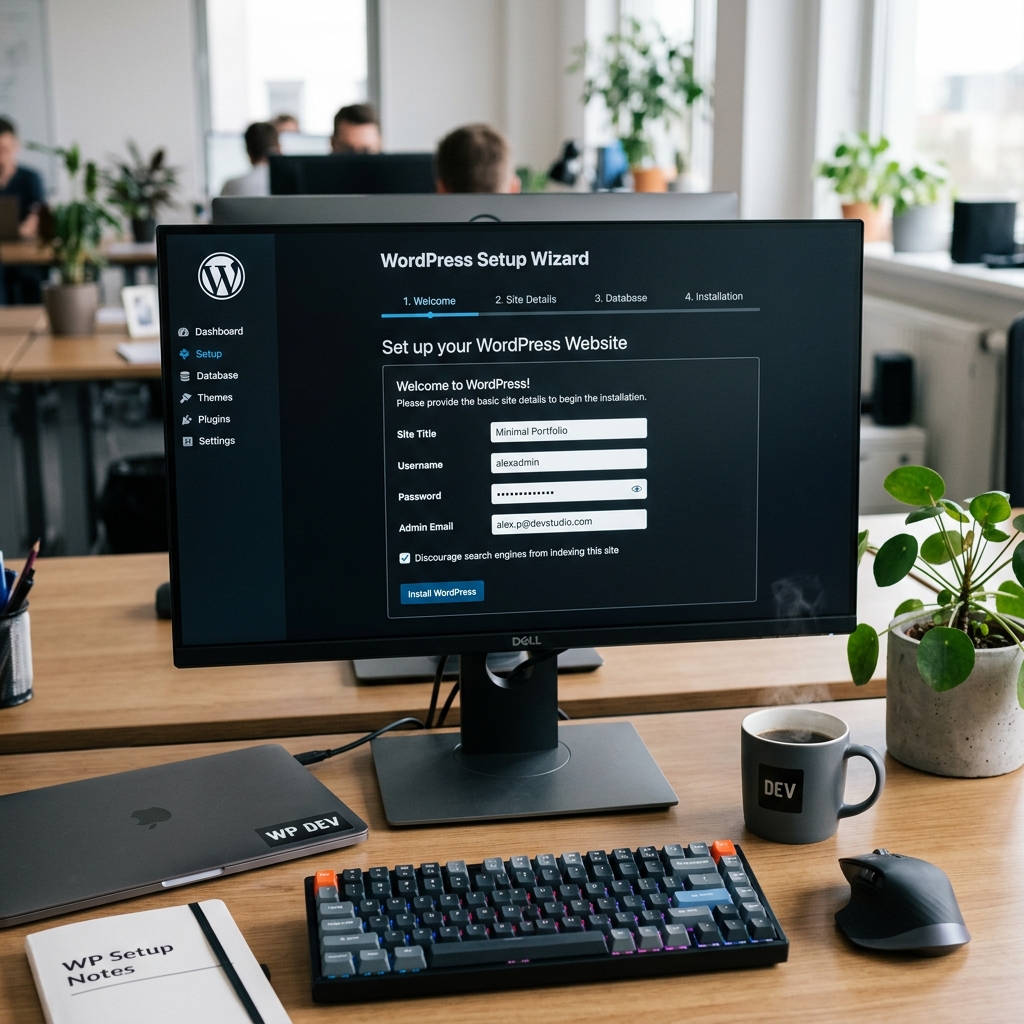
Once WordPress is installed on your new hosting account, you’ll log in and land in your dashboard.
I’ll be honest—at first glance, it might feel a little confusing. There are menus on the left, widgets on the screen, and strange terms everywhere. But give it a little time. Breathe. You'll get used to it within a few days.
This dashboard is your command center. This is where you will write your posts, manage your pages, install new themes, and control everything about how your site functions.
Why do we use WordPress? Because it is incredibly powerful and it grows with you. You can start with a very simple text-based blog today, and five years from now, you can turn it into a massive e-commerce empire without ever having to switch platforms. (Note: Make sure you are using WordPress.org, not the limited WordPress.com version).
Now, here is one very important warning: Do not install 20 plugins immediately.
Beginners love doing this. They find the plugin directory and go crazy, installing every cool feature they see—weather widgets, fancy sliders, complex analytics trackers. What happens? They end up slowing their site down to a crawl. A slow site frustrates readers and gets penalized by Google.
Start with just the absolute basics. You only need:
- An SEO plugin (like Rank Math or Yoast).
- A basic security plugin (like Wordfence).
- Maybe a simple speed optimizer or caching plugin (like LiteSpeed Cache).
That’s enough. Keep your control room clean.
Step 4: Theme & Design (Keep It Simple)
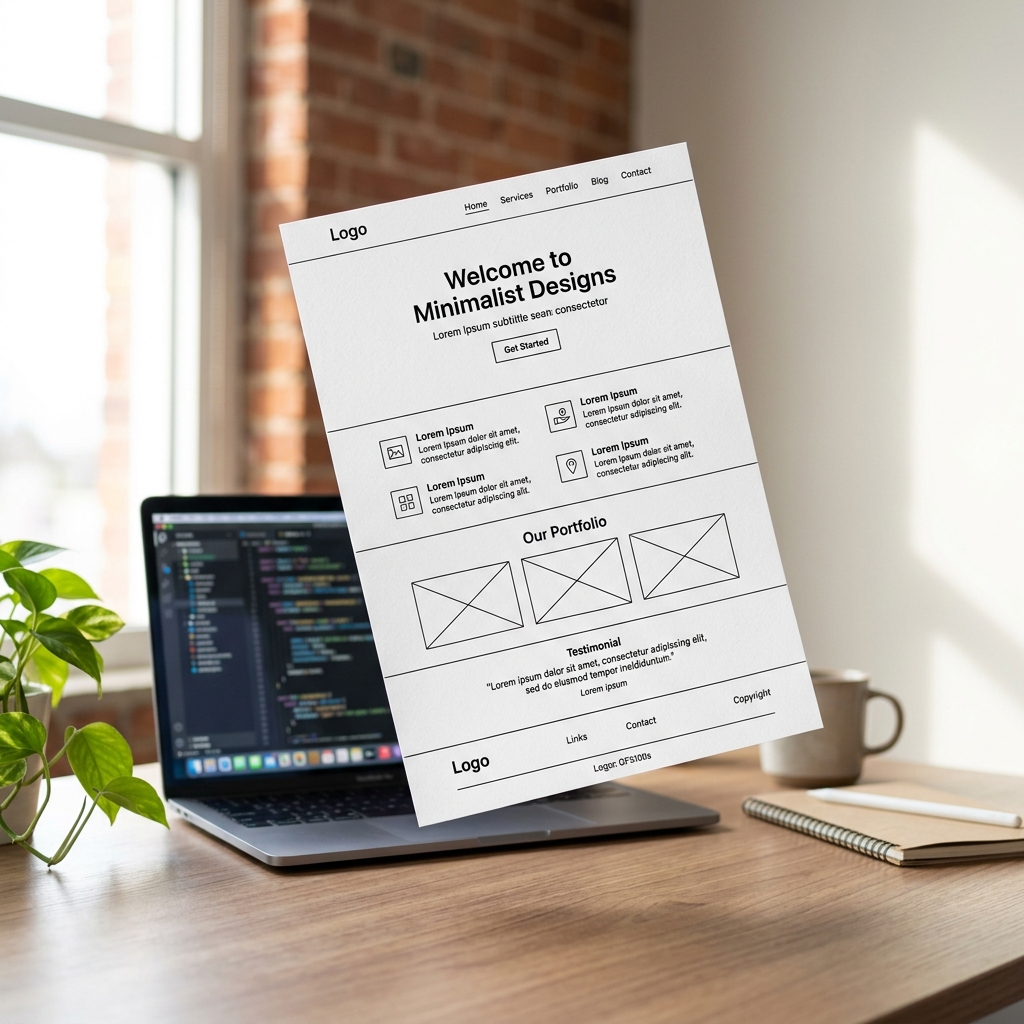
Here is a hard truth about blogging: you don’t need a “fancy” website to be successful.
In fact, if you look closely at some of the most high-performing, highest-earning blogs on the internet today, they look surprisingly simple. Almost boring, even.
Why? Because people come to your site for the content, not for the decoration. They want an answer to their problem, and they want it fast. They don't want to wait 10 seconds for a massive video background to load.
Pick a lightweight, fast WordPress theme. My top recommendations are always:
- Astra
- GeneratePress
- Kadence
These themes are incredibly fast and coded brilliantly. Install one of them, and then customize it lightly.
Stick to a clean, readable font (sans-serif fonts like Inter or Roboto are great for screens). Use dark gray text on a white background. Pick one simple accent color for your links and buttons.
Things you must avoid:
- Too many pop-up animations.
- Cluttered layouts with sidebars full of useless badges.
- Distracting elements that pull the reader's eyes away from your text.
Also, before you start writing blog posts, make sure to create these basic, essential pages early on:
- About Page: Tell people who you are and why they should trust you.
- Contact Page: Give them a simple way to reach you.
- Privacy Policy: This is legally required in many regions and absolutely essential when you want to apply for monetization later (like Google AdSense).
Remember: A clean, fast, easy-to-read blog will always win over a flashy, slow one.
Step 5: Writing Your First Blog Post (Just Start)

This is the exact moment where most people freeze up completely. They stare at the blinking cursor on a blank screen and panic.
They think: 👉 “What if it’s not perfect? What if people judge my writing? What if I sound stupid?”
Let me be very direct with you—your first blog post won’t be perfect. In fact, you'll probably look back at it in two years and cringe a little. And that’s completely fine. Everyone starts there.
Your first post is not about achieving literary perfection. It’s simply about starting. It’s about building the habit.
Pick a very simple topic that solves one clear problem for your target audience.
For example, if your niche is student productivity:
- “Best free tools for students in 2026”
- “How to organize your study schedule without burning out”
Now, start writing. But here is the secret sauce: write like you’re explaining the topic to a friend over coffee.
Do not write like a college textbook. Do not write like a corporate robot. Use the words you actually use in real life. If you want to use the word "cool," use it. Inject a little bit of your own personality and opinions into the text. That is what AI cannot do, and it's what readers crave.
Keep your writing highly scannable:
- Be clear and helpful.
- Keep sentences varied. Mix short, punchy sentences with slightly longer ones.
- Use short paragraphs. Seriously, 2–4 lines maximum. People hate reading giant blocks of text on their phones.
Also, don’t try to sound artificially “smart” by using massive, complex words. Try to sound understandable. Clarity is always better than cleverness. That’s what actually keeps readers scrolling down your page.
Step 6: SEO Basics (How People Actually Find You)

If your blog is a brand new shop hidden in a dark alley, SEO (Search Engine Optimization) is the massive, brightly lit road that brings people straight to your front door.
Without SEO, your blog is basically invisible to the world. You could write the greatest article in human history, but if no one can find it on Google, it doesn't matter.
At the simplest, most fundamental level, SEO means one thing: 👉 Writing content that people are already actively searching for.
And that process always starts with keywords.
Let's look at an example: Instead of writing an article titled: “My thoughts on the latest phones” (Nobody is searching for this unless you are already famous).
You should write: “Best budget smartphones under 20000” (Thousands of people type this exact phrase into Google every month).
See the difference? One is completely random. The other is strategically searchable.
But here’s the really important part about blogging in 2026—modern SEO is not just about aggressively stuffing keywords into your text. Google's algorithm has evolved. It is incredibly smart now.
Google cares deeply about:
- How genuinely helpful your content is.
- How clearly and thoroughly you explain things.
- How long people actually stay on your page (user experience).
So don’t just write for the search engine robots. Write for real human beings first. Answer their questions clearly. Use your keywords naturally—don't force them where they don't belong.
And most importantly, be patient. SEO takes time to kick in. It’s not instant like a viral tweet. But once it starts working, it creates a snowball effect, bringing you free, consistent traffic month after month, year after year.
(Pro Tip: Internal linking is a huge part of SEO. As you write more posts, always link them together. For example, if you write about AI tools, link back to your previous post on the top free AI tools for students.)
Step 7: Monetization (Making Real Money from Your Blog)

Ah, the money part. This is why you're really here, right?
A lot of beginners have this fantasy: 👉 “I’ll start a blog today, put some ads on it tomorrow, and make money next month.”
I hate to break it to you, but that’s just not how it works. Making money from a blog is a systematic process. You cannot skip steps.
The formula always follows this exact sequence: 👉 Content → Traffic → Trust → Money
You have to write great content to get traffic. You have to provide value to build trust. Once people trust you and visit your site regularly, then you can monetize.
Once you reach that stage, there are several powerful ways to earn:
1. Display Ads (Like Google AdSense or Mediavine) This is the easiest way to start. You let an ad network place ads on your site, and you get paid for views and clicks. However, the income is usually quite small unless you have massive traffic (think 50,000+ visitors a month).
2. Affiliate Marketing This is where the real money often starts for beginners. You recommend products or services you genuinely use and like. If a reader clicks your special link and buys it, you earn a commission. This works incredibly well if your content is helpful and your audience trusts your recommendations.
3. Digital Products Selling your own stuff—like Ebooks, courses, Notion templates, or premium guides. This is where the biggest profit margins are, because you keep 100% of the money.
4. Offering Services If you have a specific skill (like writing, design, or consulting), your blog acts as the ultimate portfolio. Your articles prove you know what you are talking about, naturally bringing clients directly to your inbox.
My advice? Don’t try to do all of these at once. Start simple. Add some affiliate links first. Apply for AdSense when you get some traffic. Build your income streams gradually.
Conclusion: The Secret to Actually Succeeding

Starting a blog in 2026 is practically frictionless. You can have a beautiful website live in an afternoon. But growing that blog into a successful, money-making platform? That requires patience and grit.
Let's be real—there is no magic shortcut.
You are going to write posts that absolutely nobody reads. You will check your Google Analytics and see "0 active users." There will be days when you feel like completely giving up.
That’s totally normal. Every single blogger has felt that exact way.
What actually matters is consistency. Every massive, successful blog you admire today started in the exact same place you are right now:
- Zero traffic.
- Zero audience.
- Zero experience.
The only difference between them and the people who failed is that they simply didn’t stop. They kept writing, kept learning, and kept hitting publish.
If you stay consistent, continuously improve the quality of your content, and focus relentlessly on helping your readers, your blog will eventually grow.
And once it does, it can easily become one of the most valuable, rewarding assets you own online. So stop overthinking it. Pick your niche, get your domain, and go write that first post. You’ve got this.


