

Affiliate Marketing for Beginners: The Honest Truth About Getting Started Online
When most people first hear about affiliate marketing, they usually encounter one of two very different stories.
The first one sounds almost too easy: "Post links online, make passive income while you sleep." The second sounds intimidatingly technical: "Build funnels, split test landing pages, optimize your EPC, scale your paid traffic campaigns…"
Neither of those explanations helps beginners much.
When I first started learning about this, what surprised me most was how straightforward the actual business model is at its core. The confusing part was not the concept. It was understanding how traffic, trust, content, and time all connect with each other before anything starts working.
That's the part this guide focuses on. Not the watered-down version, not the overhyped sales pitch. Just a realistic look at how online affiliate income actually works and what most beginners get wrong before they ever see a single commission.
What Affiliate Marketing Actually Is
 Affiliate marketing is fundamentally a referral system — you connect buyers with products and earn a commission when purchases happen.
At its core, affiliate marketing is a referral system.
A company wants more customers. You help bring those customers. If a sale happens, the company pays you a percentage of it. That is it.
You sign up for an affiliate program, receive a unique tracking link, and use that link in your content. If someone clicks it and makes a purchase within a specified window, you get a commission.
Here is a simple example: you write an article titled "Best Laptops for Architecture Students." Inside, you link to three laptops on Amazon using your affiliate links. Someone reads the article, clicks one of those links, and buys the laptop. Amazon pays you a small percentage of that sale — usually 1% to 5% depending on the category.
The customer almost always pays the exact same price they would have paid anyway. That confused me initially, because I assumed affiliate links somehow inflated product costs. They don't. Companies treat affiliate payouts as a marketing cost — which they would have spent on ads regardless.
Why Businesses Actually Prefer This Model
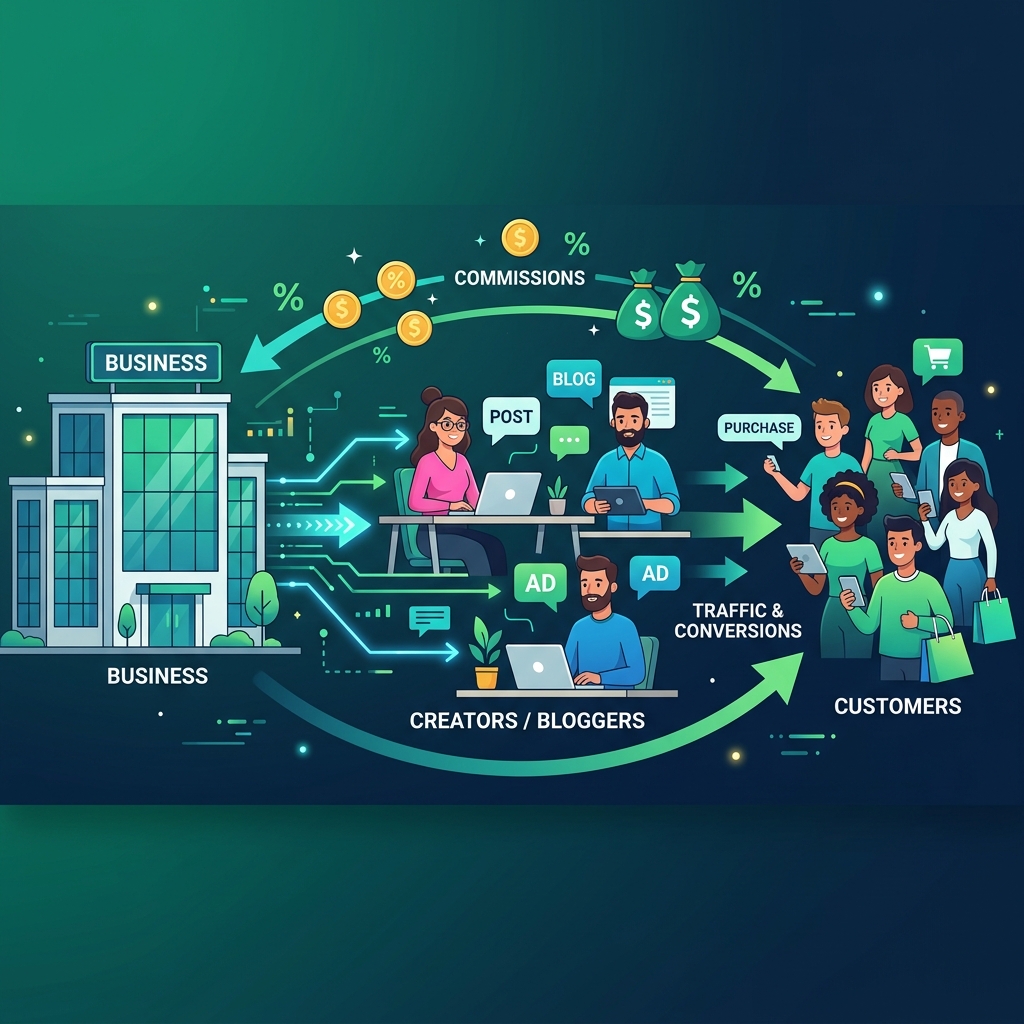 Performance-based affiliate marketing lets businesses pay for results, not promises — which is why brands are investing heavily in creator partnerships.
This is worth understanding because it changes how you think about your role.
Traditional advertising is expensive and unpredictable. A brand spends tens of thousands on display ads or TV spots and hopes it translates to sales. Sometimes it does. Often it does not.
Affiliate marketing flips that entirely.
Instead of paying upfront and gambling on results, companies only pay after a sale happens. That is extremely attractive from a business perspective. Risk is low, scaling is easy, and niche audiences can be reached through creators who have already built trust with those audiences.
That last point matters a lot. Most internet users today automatically skip ads. Banner blindness is real. But many of the same people will sit through a 20-minute YouTube review from a creator they trust. That behavioral shift is one reason creator monetization through referral commissions has exploded.
Brands have noticed. The affiliate marketing industry was valued at over $14 billion globally in 2024 and continues growing steadily.
How Affiliate Marketing Actually Works Step by Step
Most explanations of the technical process are either too shallow or unnecessarily complicated. Here is how it actually flows.
You join an affiliate program. Some programs are direct (you apply to a specific company). Others are networks that aggregate multiple programs in one place. After approval, you access a dashboard with your unique referral links.
You receive tracking links. Every link is tied to your account. When someone clicks it, the click gets recorded. A cookie stores that information in their browser.
Cookie duration kicks in. This is the window during which you earn commission if the visitor makes a purchase. Amazon Associates gives 24 hours — which is quite short. Many other programs offer 30 or 90 days, which is more beginner-friendly since people often research for days before buying.
Someone buys. You get credited. If the purchase happens within the cookie window, the commission posts to your account. Payout schedules vary — some pay monthly, others have minimum thresholds before releasing funds.
The technical side is genuinely simple. What is not simple is generating consistent traffic to make those links worthwhile. That is where most of the real work lives.
The Real Engine Behind Everything: Traffic and Attention
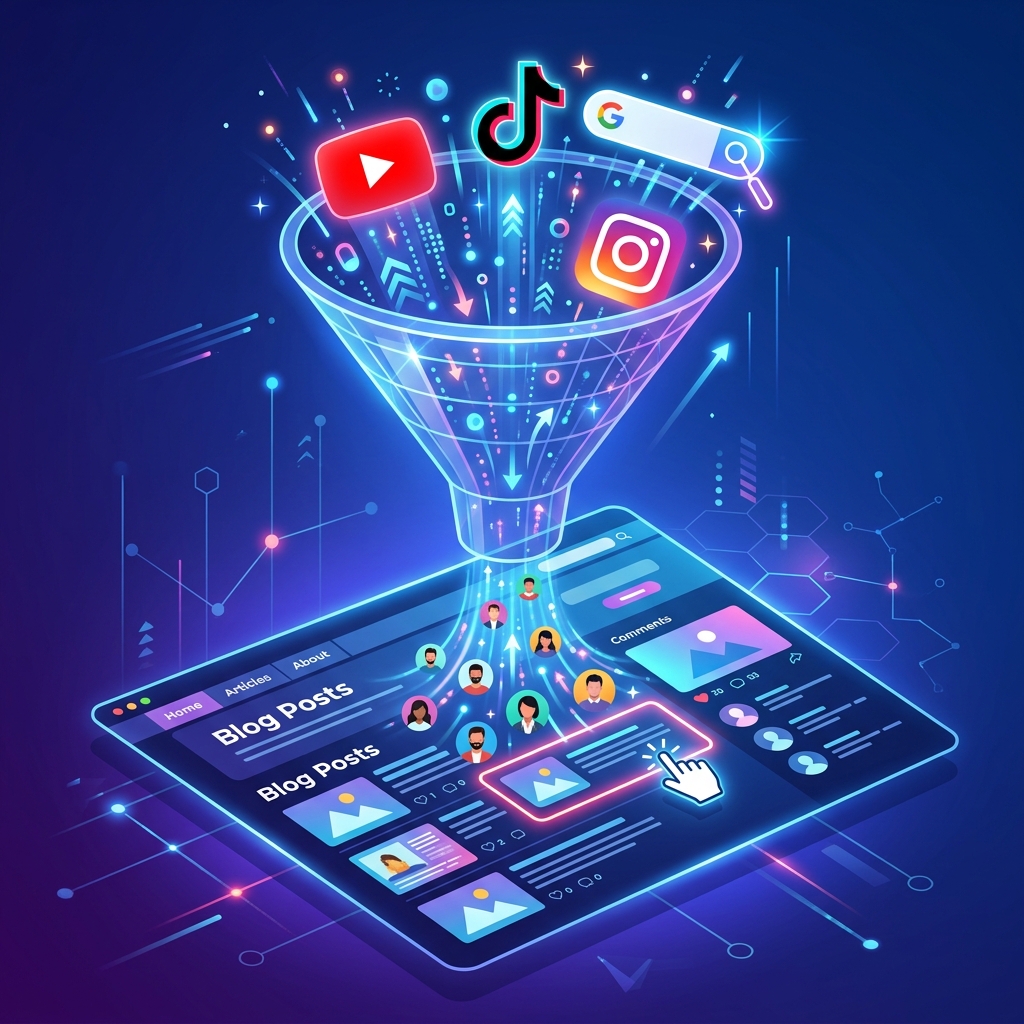 Traffic is the actual engine behind affiliate income. Affiliate links are only the final step — everything before it is about earning and directing attention.
One thing beginners consistently misunderstand is the role that traffic plays.
A lot of people focus on the link itself. Which affiliate program pays the most? Which products have the highest commissions? Those questions matter eventually, but they are almost irrelevant if you cannot get people to your content in the first place.
Think about it this way: two people promote the same product. Person A drops a link in a tweet with zero context. Person B creates a detailed review article, a comparison video, a tutorial showing how the product works, and answers every question someone might Google before buying.
Long-term, Person B wins almost every time. Not just because they create more content, but because useful content builds trust and trust is what actually converts.
There is also an important distinction between views and conversions that beginners learn the hard way.
A viral TikTok video about a product might hit a million views and generate almost no sales. Meanwhile, a Google search for "best noise-cancelling headphones under $100" might bring 300 visitors — but those 300 people are actively researching before buying. That intent changes everything.
This is why SEO remains such a powerful channel for affiliate income, even as short-form video explodes. Search traffic is slower to build, but it is far more likely to convert because intent already exists before the visitor arrives.
The Three Different Approaches to Affiliate Marketing
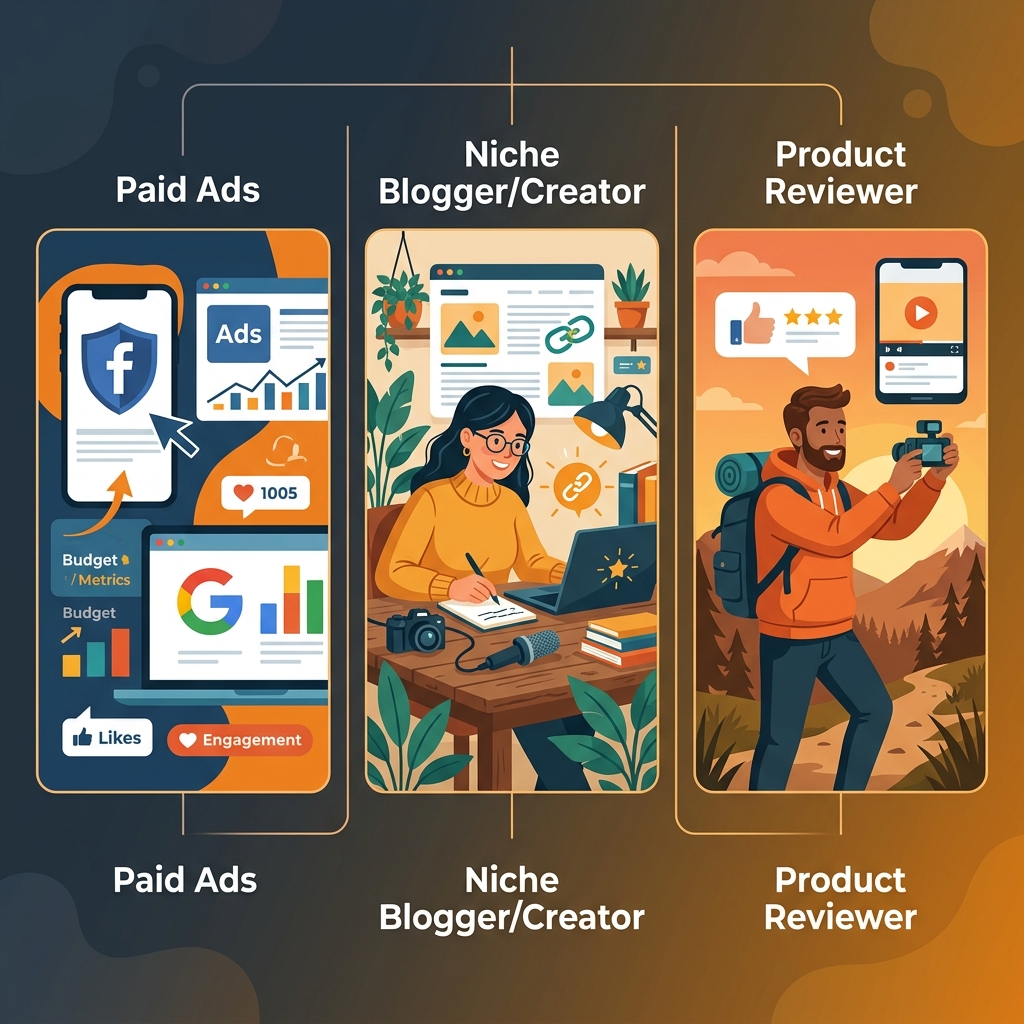 Not every affiliate marketer operates the same way. Understanding these three approaches helps you choose the right path for your situation.
Not everyone does this the same way. There are three broad approaches, each with real trade-offs.
Unattached Affiliate Marketing
This is the paid traffic model. You run ads — Facebook Ads, Google Ads, YouTube pre-rolls — directing people straight to affiliate offers without building any audience relationship.
It can scale quickly. Some people make a lot of money this way. But the financial risk is substantial. You will lose money during testing phases. Campaigns fail. Ad policies change. Most beginners do not have the capital or tolerance for this kind of uncertainty early on.
Personally, I think this is the wrong starting point for most people learning affiliate marketing for the first time.
Related Affiliate Marketing
This is the most common approach. You build content in a niche you know reasonably well and promote products related to that niche. A fitness creator recommends supplements and gym gear. A tech blogger reviews gadgets. A personal finance YouTuber discusses budgeting apps.
This works well because the audience already expects that type of content. Recommendations feel natural rather than forced.
Involved Affiliate Marketing
This is arguably the strongest long-term strategy. You personally use the products you recommend and share honest experiences with your audience.
People are surprisingly perceptive about authenticity. They can usually tell the difference between someone who has genuinely used a product and someone reading from a list. That difference shows in engagement, trust, and ultimately conversions.
Why Most Beginners Never Earn Anything Significant
 The slow early phase is the part nobody shows in their earnings screenshots — and it is precisely why most beginners quit too soon.
This is the uncomfortable section. Let's be honest about it.
Most people who try affiliate marketing never earn meaningful income. Not because the model is broken or fake. Because consistency is genuinely hard, and the timeline is longer than social media makes it look.
Here is a very common pattern: someone starts a blog or YouTube channel. They publish a few articles or videos. They check analytics obsessively. Traffic is near zero. Commissions are non-existent. A month passes. Two months. They get frustrated and either stop completely or keep pivoting to new niches looking for a faster shortcut.
I remember refreshing my analytics dashboard constantly during my first attempts even though there were basically no visitors to track. It felt ridiculous in hindsight, but the impatience was real.
The problem is that content compounds slowly. A blog post you publish today might take 4–6 months before Google gives it any meaningful ranking. A YouTube video might sit at 50 views for weeks before the algorithm picks it up. That initial silence discourages most people right before things start to turn.
Beginners also tend to publish too little content. Three articles or five videos is not enough to understand patterns, build topical authority, or attract consistent traffic. Publishing volume and consistency matter more in the early stages than perfection.
One other thing nobody talks about enough: the psychological dimension. The internet amplifies success stories and hides slow progress. You never see the 40 articles that barely ranked, the six months of $0 commissions, or the YouTube channel that got abandoned. All you see are the highlight reel earnings screenshots.
Understanding that hidden phase is normal — maybe essential — changes how you approach the work.
Choosing the Right Niche (And Why Most Beginners Get This Wrong)
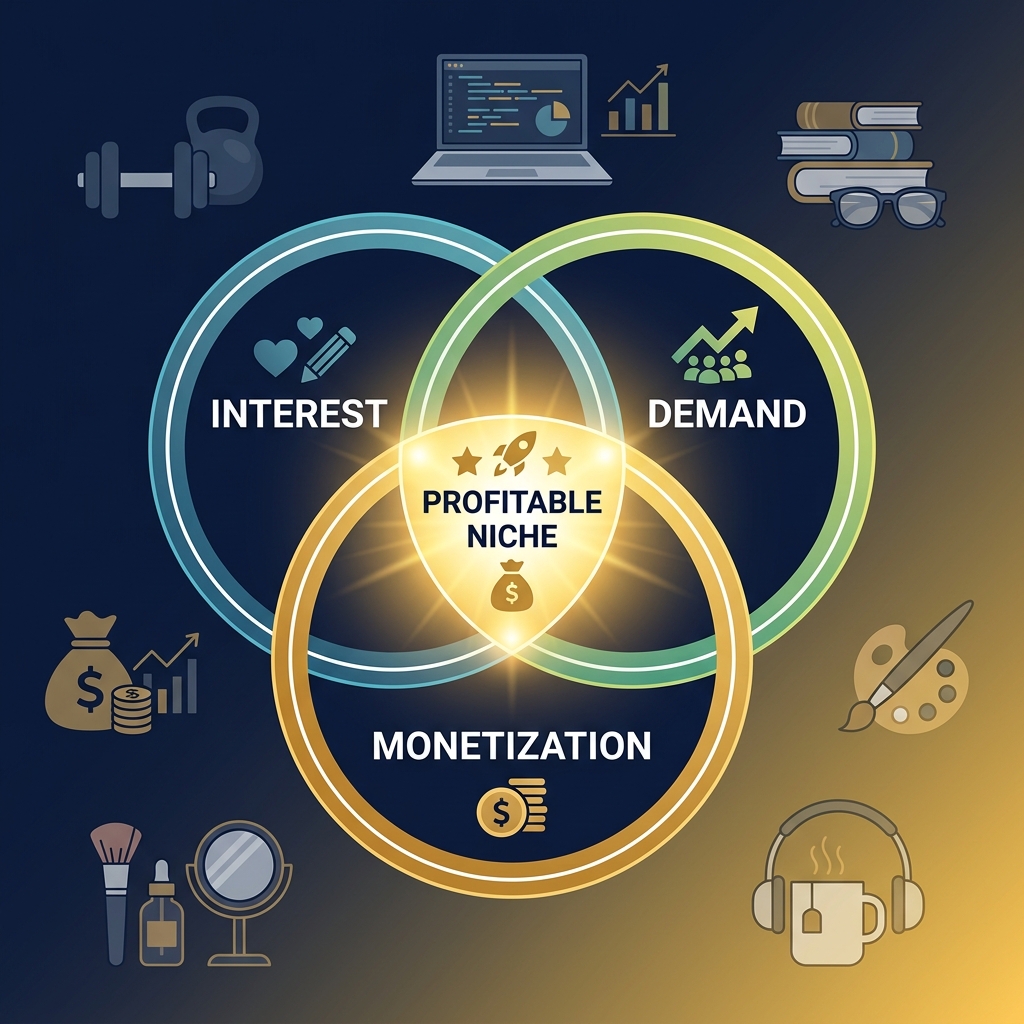 The best affiliate niche sits at the intersection of what you know, what people search for, and what people actually buy.
Two common mistakes appear here consistently.
The first is going too broad. "Technology" or "health" or "lifestyle" are not niches — they are entire industries. Trying to cover everything in the beginning means you build authority on nothing.
The second is choosing a topic with no commercial intent. Just because you are passionate about something does not mean people buy products in that space.
A better approach is thinking in specifics. "Budget microphones for home recording" is a niche. "Affordable standing desks for small apartments" is a niche. "AI tools for freelance writers" is a niche. Specific niches let you build topical authority faster and attract audiences with actual purchasing intent.
Good affiliate niches usually tick three boxes: there is clear audience demand (people search for it), there are products people actively buy, and the interest is evergreen rather than trend-dependent.
Some reliable spaces include productivity software, AI tools, fitness equipment, personal finance, remote work gear, beauty and skincare, online education, and tech gadgets. None of those will disappear next year.
The most practical advice: choose a niche where you already have some knowledge or genuine interest. You will publish more consistently, your content will feel authentic, and you will understand your audience better — which matters far more than chasing high commission rates in a topic you know nothing about.
Best Affiliate Programs for Beginners: A Realistic Look
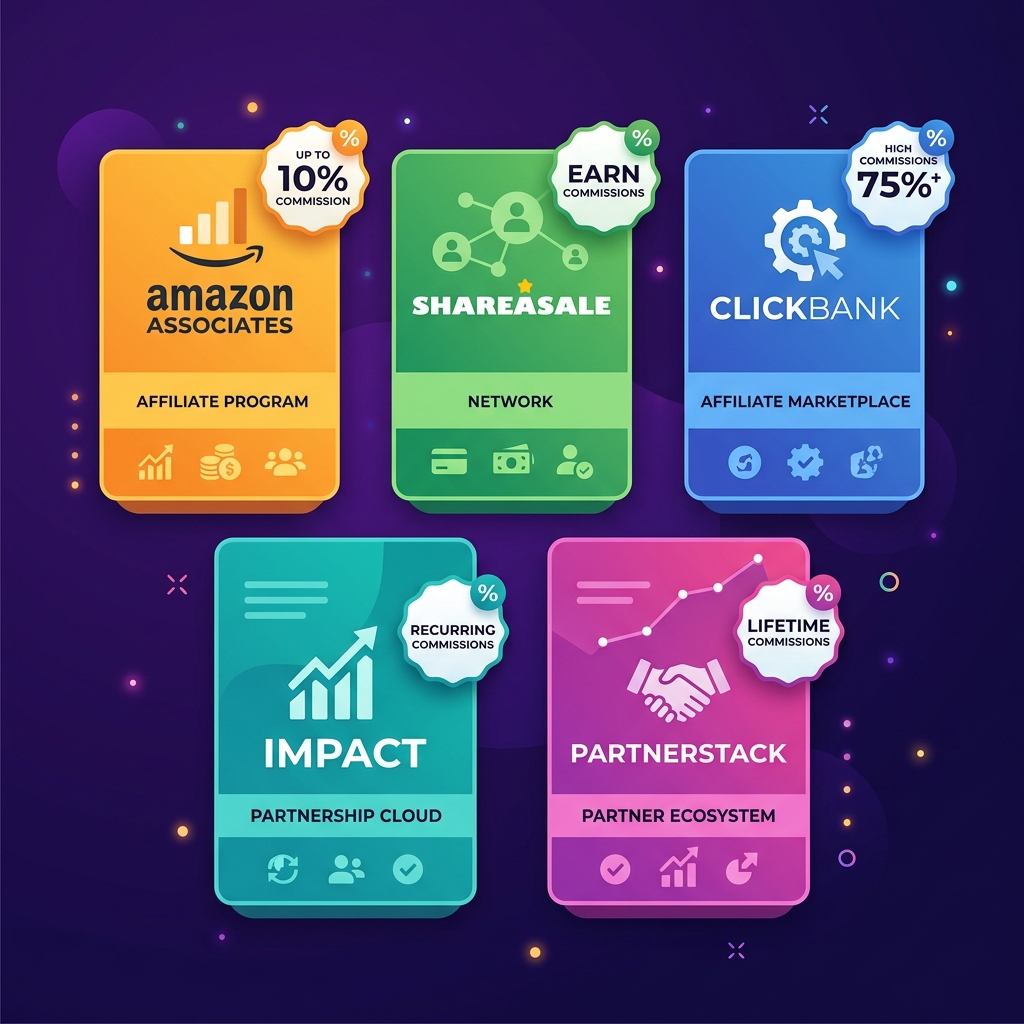 Each affiliate platform has different strengths. The right choice depends on your niche, audience, and content format.
Here is an honest breakdown of the main platforms beginners tend to use.
Amazon Associates is the most beginner-accessible program. The approval process is relatively straightforward, the product catalog covers almost every conceivable niche, and the familiar brand means visitors trust the platform. The downsides are real though — commission rates are low (often 1–4%), the cookie window is only 24 hours, and Amazon has historically cut rates without much warning. Still, for most content-based affiliate beginners, this is where it makes sense to start.
ShareASale is an affiliate network hosting thousands of programs across many niches. Commission rates are often better than Amazon, and cookie windows tend to be longer. The interface feels a bit dated, but the program variety more than compensates. Good for finding niche-specific partnerships.
ClickBank focuses primarily on digital products — online courses, ebooks, software subscriptions. Commission rates can be very high (30–75% is common). The product quality varies significantly, so vetting what you promote matters. Strong fit for content creators in niches like business, self-improvement, or online education.
Impact is a more sophisticated network used by larger brands. You will find established companies across retail, travel, finance, and software. Requires a bit more credibility to get approved by some programs, but the partnerships and commission structures are generally more reliable.
PartnerStack is specifically focused on SaaS and software companies. If your content is about business tools, productivity apps, or marketing software, this is worth exploring. Many growing software companies offer recurring commissions — meaning you earn every month someone stays subscribed through your link.
| Platform | Best For | Commission Range | Cookie Duration | Beginner-Friendly |
|---|---|---|---|---|
| Amazon Associates | Product reviews, general niches | 1–5% | 24 hours | ✅ Very easy |
| ShareASale | Niche-specific partnerships | 5–30% | 30–90 days | ✅ Easy |
| ClickBank | Digital products, courses | 30–75% | 60 days | ✅ Moderate |
| Impact | Established brands, retail | 5–20% | 30–90 days | ⚠️ Moderate |
| PartnerStack | SaaS and software tools | 10–40% recurring | 90 days | ⚠️ Moderate |
SEO for Affiliate Marketing: What Actually Matters
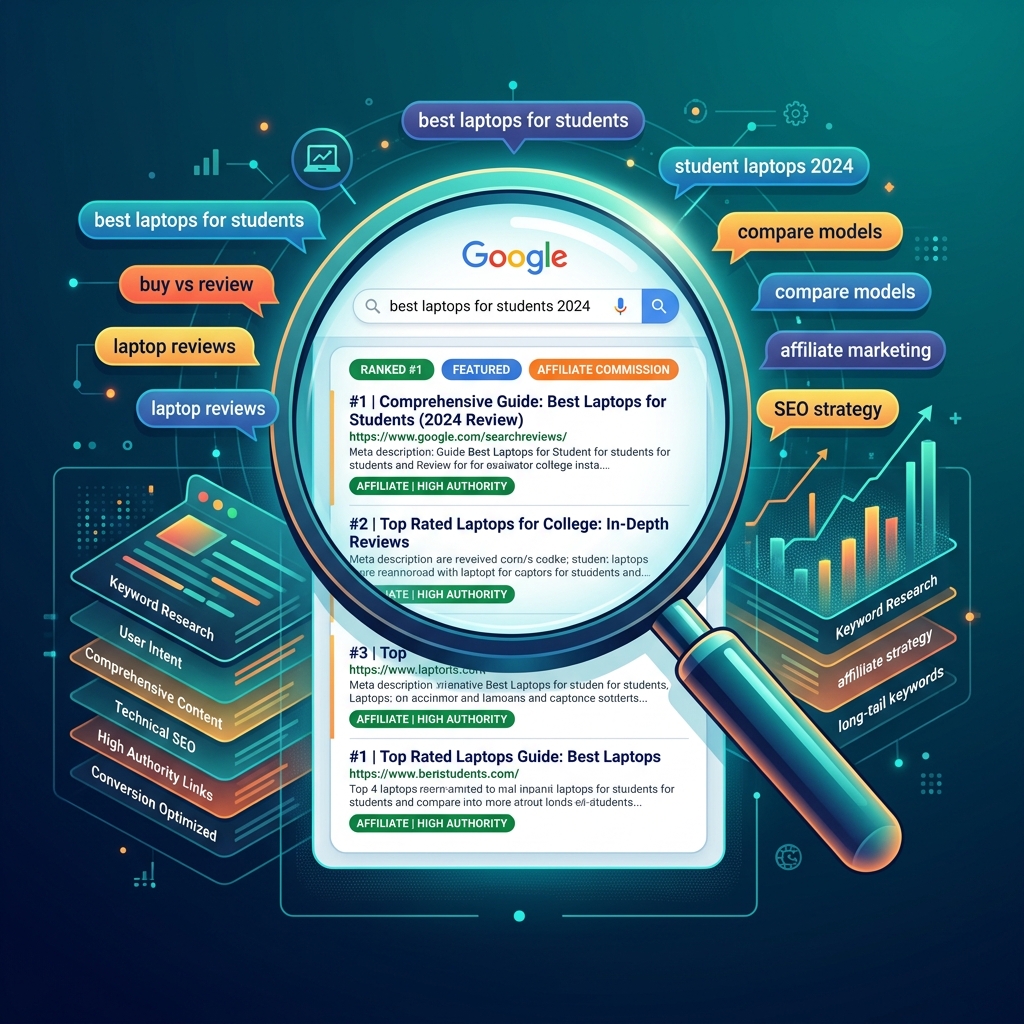 SEO for affiliate marketing goes far beyond keywords — it is about understanding what people are looking for and being the most useful answer available.
SEO sounds intimidating because people constantly overcomplicate it. At the practical level, it mostly comes down to one thing: understanding what people are already searching for and creating useful content around those searches.
That said, there are real nuances beginners should understand.
Keyword intent matters more than keyword volume. A keyword with 50,000 monthly searches but purely informational intent ("what is affiliate marketing") will convert very differently from a keyword with 2,000 searches and clear buyer intent ("best affiliate programs for finance bloggers"). Both matter — but in different ways, at different stages.
Informational content builds topical authority and brings readers into your ecosystem. Buyer-intent content converts more directly into affiliate income. A smart content strategy includes both, but beginners often focus too much on high-volume informational topics and wonder why nothing converts.
Topical authority is becoming increasingly important. Google's systems increasingly evaluate whether a site covers a topic comprehensively, not just whether individual articles hit keyword targets. Publishing multiple interconnected articles around a topic — a cluster approach — signals depth and tends to rank better over time.
Internal linking is a free SEO win that most beginners ignore. Linking between your own related articles passes authority between pages and helps Google understand your site structure. It also keeps readers on your site longer, which benefits conversions.
Shallow content now fails faster than before. AI-generated filler content that covers a topic at surface level is increasingly filtered out by search algorithms. Depth, original observations, real comparisons, and genuine experience signal value. That is actually good news for creators who put real effort in — the barrier to standing out has become more about quality, not just publishing volume.
Free Traffic vs Paid Traffic: An Honest Comparison
Most beginners eventually face this question. The honest answer is that both work, but they behave very differently and have genuinely different risk profiles.
Free traffic channels — SEO, YouTube, TikTok, Instagram, Pinterest — require time instead of money. The growth is slow initially. A new blog might take 6–9 months before Google starts sending meaningful traffic. But once that traffic arrives, it is often consistent, compounding, and requires no ongoing spend to maintain.
The compounding effect is real and underappreciated. An article you published a year ago might generate more traffic today than it did in its first three months. That dynamic makes free traffic extremely valuable long-term.
Paid traffic — Facebook Ads, Google Ads, YouTube Ads — is faster to test and easier to scale. You can know within days whether an offer converts. But you will almost certainly lose money during testing, and those losses can add up quickly without experience.
The common beginner mistake with paid traffic is treating it like a button. "I'll run some ads and make money." Paid affiliate marketing is actually a fairly advanced skill that requires capital tolerance, data literacy, and understanding of offer economics. It tends to reward people who already understand their audience and offer well.
For most beginners, I would suggest starting with free traffic. It is slower, but the learning curve is lower and the financial risk is essentially zero.
What Realistic Income Looks Like
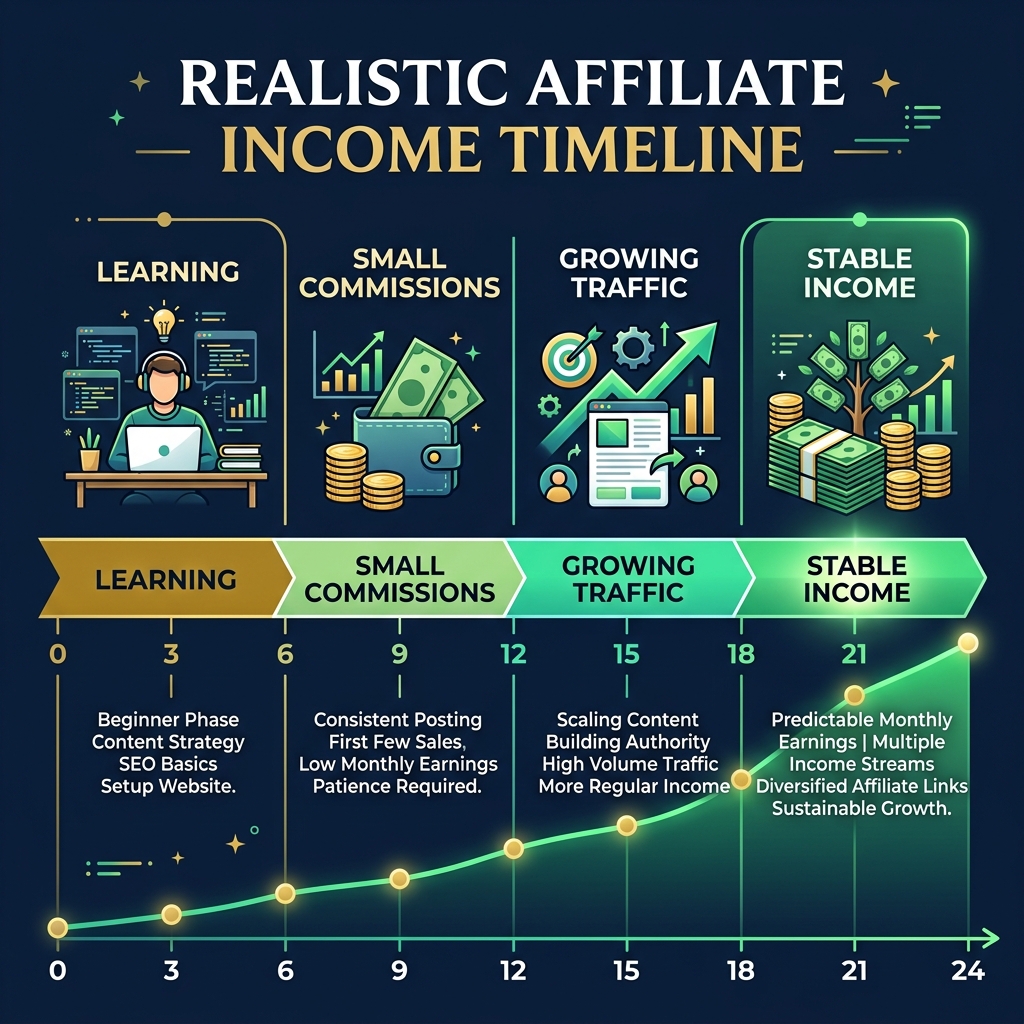 Most affiliate income timelines look nothing like the earnings screenshots on social media. This is closer to what the actual journey looks like for most people.
Let's be direct about this because social media distorts it badly.
Most beginners do not make thousands of dollars in their first month. Or their third month. The realistic timeline for most people looks something like this:
| Timeline | Typical Stage | What to Focus On |
|---|---|---|
| 0–3 Months | Learning and setup | Understanding your niche, publishing consistently |
| 3–6 Months | First small commissions | Keyword research, content quality, early SEO |
| 6–12 Months | Growing traffic | Topical authority, internal linking, email list |
| 12–24 Months | Stable income potential | Scaling what works, diversifying programs |
Some people progress faster. A few will earn their first commissions within weeks. Others take longer, especially if they start in highly competitive niches or publish infrequently.
A lot depends on consistency, niche selection, content quality, and how much time you can realistically invest. Treating early commissions — even a few dollars — as proof of concept rather than disappointment tends to produce better long-term outcomes.
The Future of Affiliate Marketing
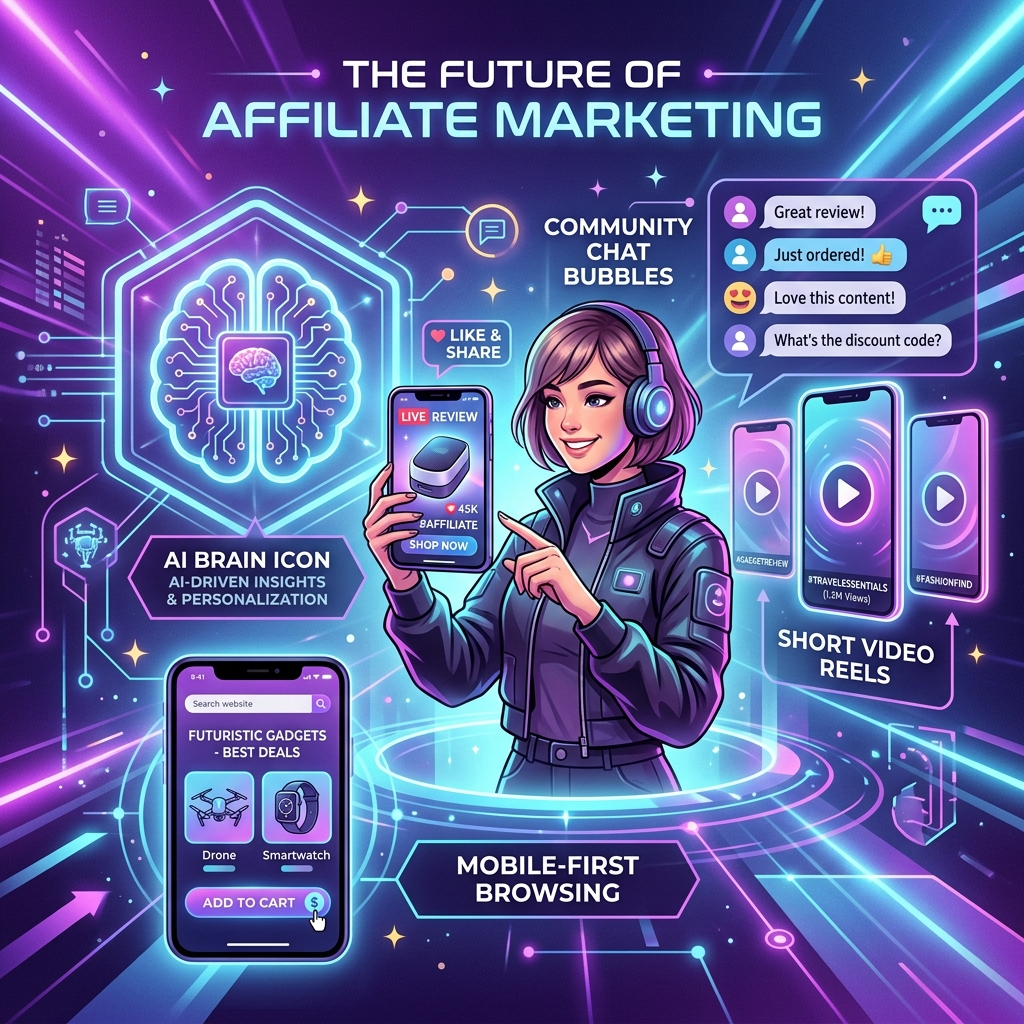 The channels and formats are evolving, but the underlying dynamic — people trusting useful recommendations more than ads — is likely to stay consistent.
The landscape is changing, but not in ways that make affiliate marketing less viable.
AI-generated content is everywhere now, which has two effects. On one hand, there is more shallow content competing for search rankings. On the other hand, original, experience-based content stands out more clearly because of the contrast. Platforms and audiences are both getting better at detecting authenticity — or the absence of it.
Short-form video is massive. TikTok, YouTube Shorts, and Instagram Reels have created new traffic channels that did not exist a few years ago. These platforms can drive awareness and discovery quickly, though they typically work better as top-of-funnel content that funnels people to longer-form reviews or comparison articles.
The creator economy continues growing. Brands increasingly prefer partnering directly with creators who have real audiences over running anonymous ads. That trend favors people who invest in building genuine audience relationships, even small ones.
Search engine behavior is also evolving. AI-powered search results are changing how some informational queries work. But buying-intent searches — "best X for Y" and "X vs Y" comparisons — still drive significant click-through traffic to affiliate content. That is unlikely to disappear anytime soon.
One thing that will not change: people trust useful, honest recommendations more than traditional advertising. That is the foundation affiliate marketing has always rested on. As long as that behavioral reality exists, the opportunity does too.
Final Thoughts
Affiliate marketing is not a magic button or a passive income vending machine. It is an actual content and publishing business that takes time, consistency, and some tolerance for slow early progress.
Some articles will barely get any traffic. Some strategies will not work. Some months will feel discouraging. That is completely normal and part of the process for almost everyone, including people whose earnings you see showcased online.
What makes the model genuinely appealing for beginners is that you can start without creating your own products, without massive upfront investment, and without any special credentials. You just need to create something useful for an audience that is already searching for it.
Your first commission might be a few cents. Your first article might rank on page seven. That is still progress — and it is the kind of proof of concept that a lot of people quit before reaching.
The people who eventually build consistent affiliate income are rarely the most technically sophisticated. They are usually the ones who kept publishing, kept improving, and treated slow early results as information rather than failure.
Start small. Learn from real feedback. Publish more than you think you need to. And give it enough time to actually work.
Frequently Asked Questions About Affiliate Marketing for Beginners
Q: What is affiliate marketing and how does it work for beginners?
Affiliate marketing is a referral-based model where you promote a product using a special tracking link. When someone buys through your link, you earn a commission. You join an affiliate program, get your unique link, create content around it, and earn when people purchase. The buyer almost always pays the same price they would have anyway.
Q: How much money can a beginner realistically make?
Most beginners earn very little in the first few months. A realistic timeline: 0–3 months learning, 3–6 months earning small commissions, 6–12 months seeing consistent growth, 1–2 years reaching stable income. Individual results vary significantly based on niche, consistency, and content quality.
Q: Do I need a website to start affiliate marketing?
Not strictly. You can use YouTube, TikTok, Instagram, or Pinterest. But a website or blog gives you better SEO advantages, more control, and long-term stability. Most successful affiliate marketers eventually combine a blog with social platforms.
Q: Which affiliate program is best for absolute beginners?
Amazon Associates is the easiest entry point — broad product catalog, familiar brand, relatively easy approval. ShareASale and ClickBank are good next steps depending on your niche. PartnerStack is excellent if you cover software tools.
Q: Is SEO necessary for affiliate marketing?
Not mandatory, but highly recommended for sustainable long-term growth. Search traffic converts better because people already have buying intent. Social media can be faster but is less predictable and often has lower conversion rates for affiliate offers.
Q: What niches work best for affiliate income in 2026?
Productive software, AI tools, fitness, personal finance, remote work, beauty, education, and tech gadgets are all reliable. The best niche for you personally sits where your knowledge meets audience demand and real purchasing intent.
Q: Can I do affiliate marketing without showing my face?
Yes. Many successful affiliates run entirely written blogs, screen-recorded YouTube tutorials, or Pinterest accounts without personal branding. Content value matters far more than personal visibility in most niches.
Q: What is cookie duration and why does it matter for affiliate income?
Cookie duration is the time window after a link click during which you still earn commission if someone buys. Amazon gives 24 hours (short). Other programs offer 30–90 days. Longer windows are better because many people research for days before making purchase decisions.
Q: Is affiliate marketing oversaturated in 2026?
Competitive, yes. Oversaturated, not quite. Shallow, generic content faces more competition than ever. But genuinely useful, deep, experience-based content still has real opportunities across almost every niche. The barrier to standing out has shifted from publishing more to publishing better.
Q: How do I get traffic to my affiliate links without paying for ads?
Focus on SEO content targeting buyer-intent keywords, build a YouTube channel reviewing or comparing products, use Pinterest for visual niches, grow a niche-specific social presence, and build an email list. Each channel takes time but compounds over months.
Related Guides
- How to Get Traffic to Your Website in 2026: A deep look at free and paid traffic strategies for growing your online presence.
- On-Page SEO Checklist for Beginners: Exactly what to optimize on every page you publish for better search rankings.
- How to Earn Money with AI in 2026: Combining AI tools with affiliate and content strategies for faster results.
- Keyword Research Guide for Bloggers: Finding the right search terms before you write a single word of content.

