

On-Page SEO Checklist 2026: Simple SEO Tips That Actually Help Beginners
Starting a blog feels exciting at first.
You publish a few articles, refresh Google Analytics every couple of hours, and quietly expect traffic to magically appear. It never really does — at least not that fast.
I remember publishing one of my first posts and genuinely thinking it would rank within a week or two. It barely picked up any clicks for almost a month. That was the moment I finally accepted that SEO is a lot slower than most YouTube tutorials make it sound.
And honestly? A lot of beginners are stuck on the same idea I was — that SEO is just about adding keywords everywhere. Stuff the keyword in enough times and Google will notice. That might have worked better a few years ago. These days, it mostly just makes your writing feel robotic.
Google's gotten smarter. It cares a lot more about whether your content actually helps people. If someone opens your article and leaves after reading two sentences, that sends a bad signal. And readers definitely notice when writing feels forced.
Good SEO content in 2026 sounds human. It answers real questions, explains things clearly, and does not feel like it was assembled by a machine trying to please an algorithm.
If you are just starting to learn on-page SEO, this guide covers the fundamentals in plain language — no confusing jargon, no "here are 47 steps" rabbit holes. Just the stuff that actually matters when you are beginning.
What Are Keywords, Really?
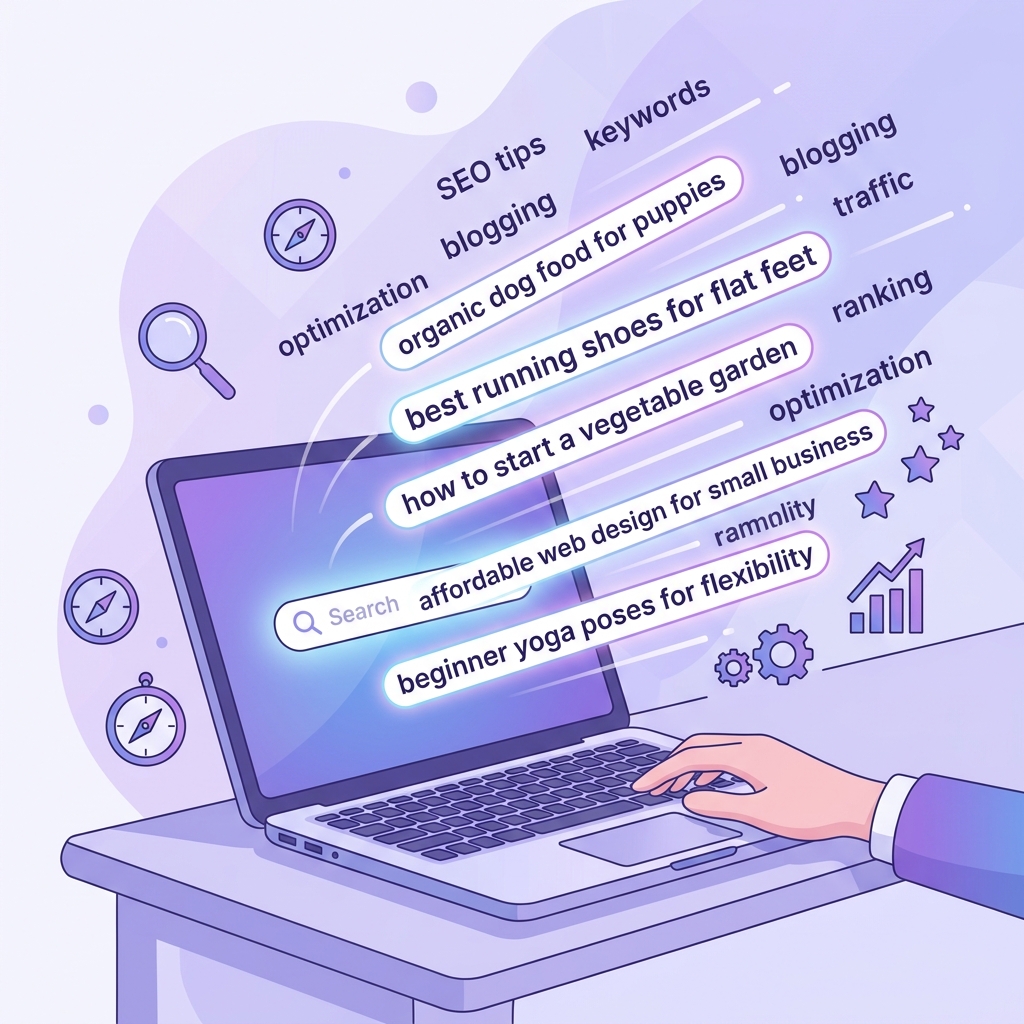
Keywords are just the words people type into Google. That is the whole thing.
Someone searching for "easy SEO tips for beginners" probably wants a simple explanation without needing a marketing degree. Google tries to match that search to pages that actually answer the question properly.
That is why keyword research matters. The right keyword helps your article reach people who are already looking for exactly what you wrote about.
But here is where most beginners go wrong.
They repeat the same keyword over and over because they assume it signals relevance to Google. It used to help more. Now it mostly just makes the article awkward to read — and readers leave fast when content sounds unnatural.
Here is a quick mental check: read your article out loud. If you stop and think "who talks like this?" at any point, you probably over-optimized something.
The Different Types of Keywords

Not all keywords work the same way, and understanding the differences early will save you a lot of wasted effort.
Short-Tail Keywords
These are the big, broad searches:
- SEO
- Blogging
- Marketing
They get massive traffic. But the competition is brutal. Huge websites with years of authority dominate these results. If your blog is brand new, trying to rank for a word like "SEO" is like opening a corner cafe and trying to outrank Starbucks. It is technically possible but probably not the smartest use of your energy.
I wasted a lot of time chasing broad keywords before finally understanding this.
Long-Tail Keywords
Long-tail keywords are more specific searches. Things like:
- "How to improve blog SEO naturally"
- "Simple SEO checklist for beginners"
- "Best free keyword research tools for bloggers"
Search volume is lower, but the audience is usually much more targeted. Someone typing a detailed phrase normally knows exactly what they want.
For smaller blogs, long-tail keywords usually make way more practical sense. You are not going to beat Moz or Ahrefs for the word "SEO." But "simple on-page SEO tips for new bloggers"? That is a much more realistic fight.
Low-Competition Keywords
These are keywords where fewer strong websites are competing. New bloggers tend to grow faster by starting with smaller, specific topics instead of swinging for the biggest keywords right away.
Examples:
- "SEO basics for personal blogs"
- "Easy keyword research methods for beginners"
- "How to do on-page SEO without plugins"
These may not flood your blog with thousands of visitors overnight. But they are realistic. And realistic keywords are almost always better for beginners than exciting-sounding keywords that are basically impossible to rank for.
Free Tools That Actually Work

Honestly, most beginners do not need expensive SEO software when they are still learning. People spend money on premium tools and then barely use a fraction of the features.
Free tools are more than enough while you are building your foundation.
Google Keyword Planner
This is one of the most trusted free tools out there — mostly because the data comes directly from Google. Bloggers use it to:
- Find keyword ideas
- Check approximate search volumes
- Understand general trend patterns
It is not perfect for every use case, but as a starting point, it is hard to argue with data that comes straight from the source.
Ubersuggest
Ubersuggest became popular partly because it actually feels beginner-friendly. The dashboard is much easier to navigate compared to tools built for enterprise SEO teams.
You can quickly check keyword suggestions, see how difficult they are to rank for, look at competitor ideas, and spot content opportunities. I genuinely recommend starting with simpler tools like this because advanced SEO platforms can feel overwhelming when you are just getting started.
AnswerThePublic
This one is a bit different — it focuses on the real questions people actually type into search engines. You will see searches like:
- "Why is on-page SEO important?"
- "How do keywords improve blog rankings?"
- "What helps content rank higher in Google?"
Question-based keywords are incredibly useful because they align naturally with what people actually want to know. And honestly, answering real questions usually works far better than forcing random keywords into articles just to hit some imaginary density target.
Before You Pick a Keyword, Think About This

One mistake almost every beginner makes is choosing keywords purely because the traffic numbers look impressive.
High traffic sounds exciting. But high competition usually comes attached to it.
A smarter approach is choosing keywords that:
- Match your topic naturally
- Have realistic competition levels
- Fit smoothly inside the article without being forced
- Reflect what real readers are actually looking for
Long-tail keywords are usually safer because they attract more targeted visitors. Someone searching "how to do on-page SEO for a new blog" is probably way closer to actually reading your article than someone searching just "SEO."
It also helps to think like an actual person instead of an SEO expert.
Ask yourself: "What would someone actually type into Google if they needed this information?"
That one question helps more than most people give it credit for. It keeps you focused on real intent instead of what sounds good in a spreadsheet.
Something Most Beginners Skip: Check Who Is Already Ranking
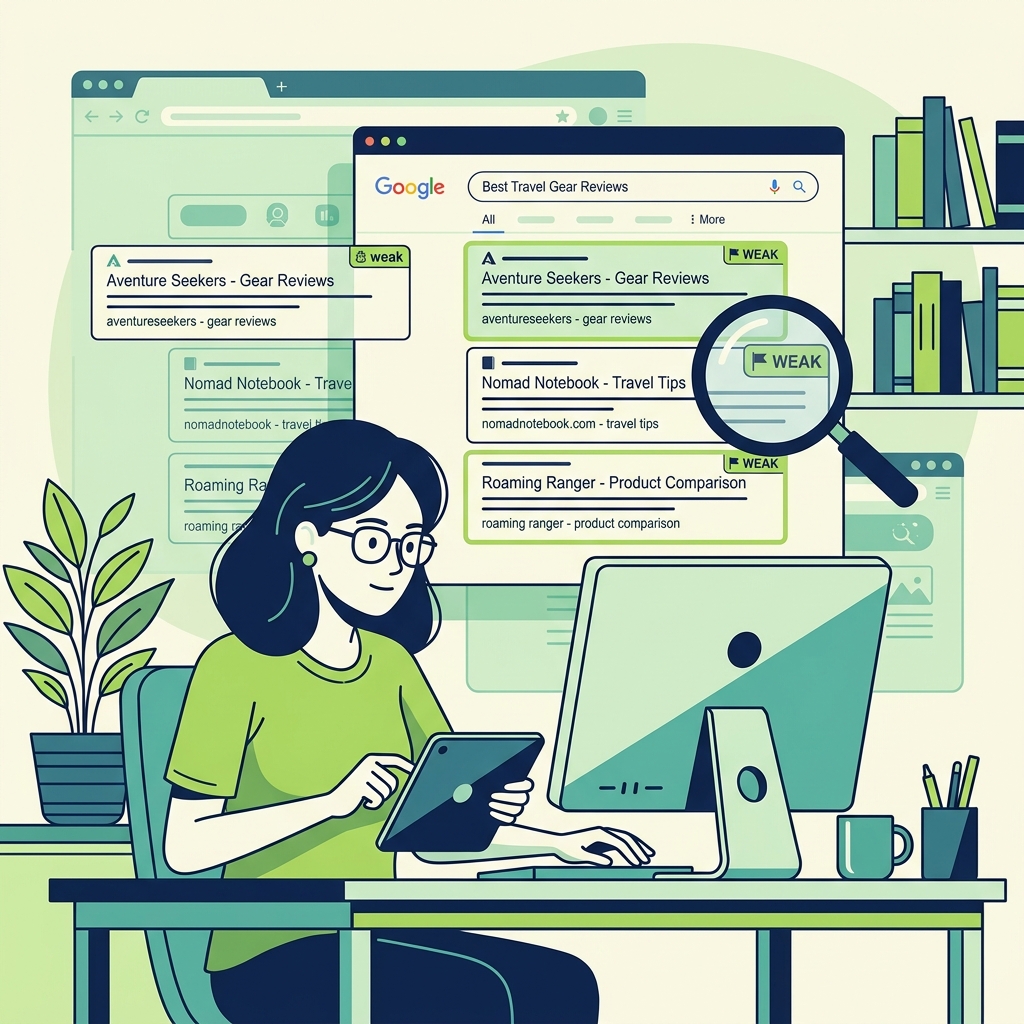
Before writing a post, spend five minutes looking at the pages already ranking on Google for your target keyword.
You do not need to do a full deep-dive competitor analysis. Just look at:
- General article quality
- How clearly things are explained
- The website's overall authority
- How recent the information is
Sometimes the top-ranking pages are honestly not that impressive.
Some are outdated — written a few years ago and never updated. Some are genuinely hard to read, filled with dense paragraphs and no clear structure. And some feel like they were written entirely for search engine bots, not for actual humans.
That creates an opportunity.
If you can explain the same topic more clearly, organize it better, and make it easier to read, you already have a real advantage. You do not need a perfect website or thousands of backlinks to compete with weak content.
Backlinks matter too, but beginners often obsess over them way too early. Useful content published consistently still goes a long way.
Final Thoughts: SEO in 2026 Is More Human Than Ever

SEO in 2026 is honestly more focused on real people than it has ever been before.
Search engines are increasingly good at rewarding content that sounds helpful, trustworthy, and natural — not keyword-stuffed or robotically formatted.
Not perfect. Natural.
For beginners, the smartest approach is usually the simplest one:
- Choose realistic keywords you can actually compete for
- Write for actual readers, not for algorithms
- Stay consistent even when results are slow
- Focus on producing content people genuinely enjoy reading
Results are slow at the start. That frustrates almost everyone — including me, back when I was checking my analytics every few hours hoping for a miracle.
But over time, helpful articles tend to dramatically outperform content that was written purely to manipulate rankings. The gap only gets wider the longer you stay consistent.
Instead of chasing every new SEO trick that shows up in your feed, focus your energy on building articles that people genuinely find useful and want to share. That approach lasts longer. It compounds. And eventually, it works.
Start simple. Pick a keyword you can actually win. Write something genuinely helpful.
That is really the whole checklist.


